

It’s all about agitational roughness. The roughness of sandpaper makes itself experienced, known, through difference. Those tiny grains of sand, each grain announcing itself as but so many irregularities across surface, giving miniscule – but no less felt – depth. Your hand touches it. Scratchy. You hear the sound it makes as agitational technology. Grating. You hear it because it makes dialogue with objects – of resistance, of refusal, of rejection. You feel it because its force resonates, because its vibration on and against other objects, is sent into the world.
Read More
Three Poems By Philip Metres
the margin is not the margin
to the margin / the central drone
trails a sound like a lawnmower
mowing down the sky / you look up
Read More
Don’t You Know That It’s So? By Joe Bonomo
And yet this is how memory, song, and story conspire: I will eternally shame myself with this small incident, and two unrelated cultural moments—a graphic catastrophe, a silly song—will be forever entwined in my mind.
Read More
The Archivist of Baghdad by T.L. Khleif
The archivist read the words again and tried to ignore the stirrings of a new fear.
Read More
Three Poems By Laura Bernstein
We follow directions: spread a shallow bed of seeds
in my belly button, place plastic wrap layers over
my stomach, and lay my body out in sunlight.
Read More
Ledge by Jill Talbot
We shouldn’t have been up there, up on that roof. Bud Lights guzzling the night. I remember the first students shuffling the sidewalks before the sun. Their heads down, their backpacks heavy as the dark folded its envelope. Only then did we think about pulling our legs up from the ledge.
Read More
Bowerbirds By Jennifer Stock
When I was twelve, my parents took me to see an eccentric house in Wheeling, West Virginia. Plastic statues in clashing scales and jubilant disarray erupted from the house’s property lines: reindeer, jack-o-lanterns, Santas, teddy bears, flamingoes, nutcrackers, Jesus, Joseph, swans, Mary, and Magi, all interspersed with American flags. The owner had created a rickety grid-work of grotto-like displays extending around the home’s perimeter, a polyptych taken over by American holiday icons.
Read More
Matthew Gavin Frank on his new book, Preparing the Ghost: An Essay Concerning the Giant Squid and Its First Photographer. Myth, genre, ice cream, and some serious squid obsession.
A Normal Interview with Matthew Gavin Frank
By Jordy Dakin
Jordy Dakin: The concepts of myth and mythologizing as you explore them in your essay extend to everything from sea monsters, relatives passed on, and ice cream. The connections are seemingly tenuous at first, but end up fitting together quite nicely and providing the essay with a helter-skelter, yet still logical structure. Can you tell us a bit about how you developed the connections and about your process of structuring the essay?
Matthew Gavin Frank: So when I first saw the carcass of the giant squid in the Smithsonian’s National Museum of Natural History, it did not strike me as all that obsession-worthy. It was desiccated and crusty. But when I saw the photograph on the wall above it—the one (as I learned from the 3-line caption) taken by Reverend Moses Harvey in St. John’s, Newfoundland in 1874; the first-ever photograph of the giant squid; the image that rescued the animal from the realm of mythology and finally proved its existence; the one in which its carcass is draped over Harvey’s bathtub curtain rod in order to showcase its full size—that did it. I wanted to know what the giant squid, and our engagements of, and reaction to it could tell us about ourselves. The poet Alberto Rios writes of "turning away from the explosion," addressing the duty of writers to turn their backs on the subjects that are primarily inflaming them, and recording, then, what they see in the other direction. The theory is that these seemingly dissimilar things, glimpsed only when turning the back on the main subject, have something to say about that main subject. At various intervals, I turned my back on the giant squid and found these ancillary subjects (which turned out to be ice cream, my long-dead saxophonist grandfather, various cultural expressions of pain, and—in an early draft—puppets and puppet parts) that began to haunt the narrative. These things had something to say about the squid, and the squid, and what it means, changed due to its proximity to these things. Eventually, I hit a wall in the writing process, and I lit out for Newfoundland in order to shake something loose, immerse myself in what the filmmaker Werner Herzog likes to call “the voodoo of place.” I stalked the current resident of the Harvey home when I was there. I needed to see that bathroom in which a giant squid once hung. During the writing process I spent most of my time trying to map my own ecstasy (in the face of uncovering and shuffling through all of this awesome research) onto Harvey’s assured ecstasy in the face of that fateful squid, and all of the lovely and awful ways that it changed his life.
JD: When I purchased the book, I found it in the “Nature” section at Barnes & Noble. And yet this is obviously far more than just nature writing—you play around with history, biography, biology, and personal essay, among other forms. The fact that it can’t be pinned down to one precise genre seems to transform it into a myth of its own, a monster that can’t be known. How do you see genre, or the form of your essay, functioning in relation to its content?
MGF: I love that. Hell. Thank you. Honestly, I don't know what nature writing even means, so I don't know if Ghost is far more or far less, or if amounts and percentages should even come into play. I guess since there's an ocean in it and a squid in it, the book engages some sort of nature. I think a tree might even make an appearance about a third of the way in. It seems that the current trend (which is not a bad thing, because it is inevitable and energetic), is to disavow easy labels for what we do. Nonfiction clearly means very little, and creative nonfiction is silly, and literary nonfiction is silly, and narrative nonfiction is silly, and lyric essay may be played-out, and just plain essay has been fucked over by the academy, and let's face it, bookstores want to sell books. I know some essayists now who tell me that they're creating artifacts. I don't yet know whether to love or hate that. Anyhow, regarding the form of Ghost: Structurally, these ancillary subjects I mentioned began to draw a chalk outline around the squid, and the trick was finding the right blend of chalk to evoke the body. Or maybe, structurally, the process was more akin to the overlaying of those onion-skins—one atop another—in those architectural diagrams. If you have the right amount of onion-skins, you can envision the entire anatomy of the building—all of these seemingly dissimilar parts: metal and wood and cement—coming together to make one thing. And then you can ornament it—put in couches and stuff, a fireplace. And then you can do stuff in it—eat and fuck and sleep and live. Invite friends over. Too many onion-skins, and the building collapses.
JD: I’m fascinated by Joan Didion’s assertion that “We tell ourselves stories in order to live,” as well as Dr. Clyde Roper’s, that “people must have their monsters.” Why do you think this is? And more importantly, what are the consequences when we “kill our monsters,” expose them as either fact or fiction, photograph our myths?
MGF: Clearly, we're a species that needs to girdle our world in order to make it manageable, digestible, and we do that girdling, oftentimes, with narrative. We do it also via the ways in which we frame scientific inquiry, construct a work of literature, paint a painting, pick and choose aspects of a religion and then dress ourselves in said aspects. Sometimes, I think it's the duty of art to hew through the chaos, the white noise, and to laser focus on the holiness of one or two small things suspended within it. Sometimes, though, art needs to muddy our attempts to wedge manageability into the crevices of the world. Sometimes, art needs to call out our narratives (and their desire to simplify the world for us) as illusory. To call attention to the mess. To agitate rather than to confirm. In "killing our monsters" we engage in a violent act (actually or rhetorically) and allow ourselves the power to kill not only our own inventions and projections, (which, depending on the context, can be good for us, or bad for us), but also the physical manifestations of said projections—like, for instance, the giant squid. First, we claimed ownership of it via mythology—it became a tool in our stories; stories that served us, of course, and not the squid. Then, we further lorded our power over it by taking its photograph, which allowed us to discard its previous narrative usefulness, and to invent new ways in which we can use it—in art, literature, religion, and now, the dissection table. If Roper's right, and we must have our monsters, then the consequence of killing our monsters is that we will soon busy ourselves with reducing yet another intricate nuanced thing with which we share this world to a monster; and we will do this at our convenience.
JD: They way you’ve written the real-life Moses Harvey relies heavily on speculation, invention, and “professional leeway”—much like, as you’ve pointed out, the reconstruction of a dinosaur skeleton, or a Neanderthal diorama in a museum—and your essay treats fact and fiction as equals, both of them legitimate and effective devices in carrying the essay forward. What role do you see invention or fictionalization playing in your essay?
MGF: I see invention and fictionalization—just as I see archival and observational research—as tools required for building truth. It's the essay's duty, after all, to interrogate facts, to test their parameters. To see what they're made of. How much scratching can a fact take before it begins to bleed, or to leak out some holy inner stuff? What happens when we strip a fact of its swagger and bravado? When we wedge one fact up against a seemingly dissimilar fact and gawk from the shadows to see how they react, collide, repel, couple, bump-and-grind, kiss each other goodbye? Is there magnetism? Electricity? Aversion? Does one fact wilt and become something else? Mere image? Fiction, maybe? Archival research dictates that Moses Harvey died in at least two ways—deliberate suicide and accidental fall. Which was it? Both narratives thrive in various obituaries printed by reputable newspapers. Fact and narrative are ever-entwined, and the rendering of fact is ever subject to human flight-of-fancy—to boredom or excitement, or agenda; to getting caught-up. Facts and speculation based on said facts depend on each other. How can we get to the heart of one without the other?
JD: I’m dying to know your favorite flavor of ice cream.
MGF: As a savory first-course: chicken liver ice cream with crispy pancetta, supremed blood orange, maple-caramelized onion, toasted hazelnuts, and Gewurztraminer gelee.
Matthew Gavin Frank is the author of Preparing the Ghost: An Essay Concerning the Giant Squid and Its First Photographer, Pot Farm, and Barolo, three books of poetry and two chapbooks. His essay collection/cookbook, tentatively-titled The Food You Require is Heavier: 50 States, 50 Essays, 50 Recipes, is forthcoming in 2016 from W.W. Norton: Liveright. He teaches at Northern Michigan University, where he is the Nonfiction Editor of Passages North. This winter, he tempered his gin with two droplets (per 750ml) of tincture of odiferous whitefish liver. For health.
Jordy Dakin is a third year Creative Writing student focusing on fiction. He is an avid collector of hometowns, which include Santa Rosa, California; Grandview, Washington; West Monroe, Louisiana; Ouray, Colorado; Oakhurst, California; Branson, Missouri; Bonney Lake, Washington; and now Fresno. He is currently at work on his first novel.
Artwork is by Robert Amador, a drawer / painter / muralist / toy-maker / gardener, living and working in the Central San Joaquin Valley of California. His belongings have layers of dog hair, and his lungs are coated in graphite.
Jordy Dakin is a third year Creative Writing student focusing on fiction. He is an avid collector of hometowns, which include Santa Rosa, California; Grandview, Washington; West Monroe, Louisiana; Ouray, Colorado; Oakhurst, California; Branson, Missouri; Bonney Lake, Washington; and now Fresno. He is currently at work on his first novel.
Artwork is by Robert Amador, a drawer / painter / muralist / toy-maker / gardener, living and working in the Central San Joaquin Valley of California. His belongings have layers of dog hair, and his lungs are coated in graphite.
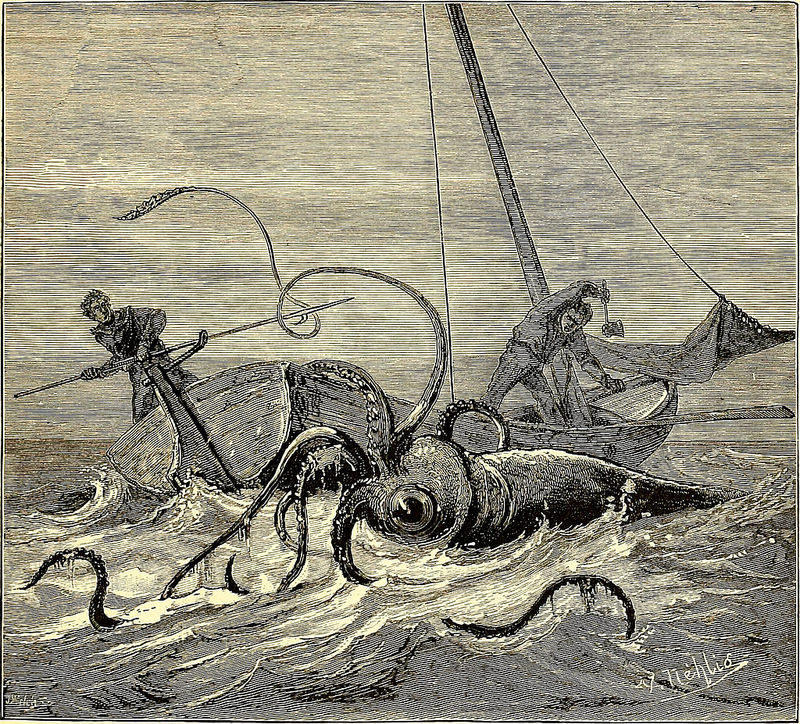
Song about a Squid By Matthew Gavin Frank
So why the giant squid, after all? How did this particular beast become the basis for our Kraken? Why is it that when we think of the proverbial Sea Monster, the image most of us generate is one that most closely resembles the giant squid? Why is this animal the recipient of our need to mythologize? The giant squid is real, yet somehow remains, simultaneously, in the realm of myth. What combinatory cocktail does the giant squid embody that allows it, to the human world, to straddle both worlds: the actual and the legendary? Maybe it’s merely a fusion of its size and its rarity.
Read MoreA Normal Interview with Justin Hocking
By Rusty Birdwell
Justin Hocking on surfing, the White Death, Melville's ghost, and his new memoir, The Great Floodgates of the Wonderworld which was a Barnes and Noble Discover Great Writers selection, and of which he says, "I took my cues from Moby-Dick—a sprawling, polyphonic, multivalent work that blends the personal with the political and the metaphysical."
Rusty Birdwell: How did you decide on the book’s structure? The titled sections range from one paragraph to several pages (one of my favorite sections being ‘Samsara’)—how do the short and long sections, and white space, serve the book?
Justin Hocking: Wonderworld revolves largely around my longtime preoccupation with the life of Herman Melville and his novel Moby-Dick. Writing about a classic work definitely involved some risks, and one thing I wanted to avoid was any sort of literary ventriloquism. On the other hand, I did allow myself to draw inspiration from what I found in Moby-Dick's unconventional structure, which is that all things are admissible within the bounds of a single work: short sections, long sections, fiction and nonfiction, stagecraft, slapstick humor, reportage, meditations, environmental writing, literary criticism, etc. This freed me up to digress and meander and experiment with form. I organized one of the longer, crux sections, "The City Swell," as a series of surf reports. Within the shorter sections, I was striving for a kind of economy and compression of language that we find in work by poet-memoirists like Nick Flynn. Flynn and others allow for white space and gaps in their poetry and nonfiction, in a way that trusts the reader to make their own connections, without leaning too heavily on conventional, linear narrative. Most poetry collections rely on a slow accretion of resonant images, themes and language, and that was definitely part of the effect I was hoping for in the memoir.
RB: The best books strive toward the universal and the personal; this book steps seamlessly between the two. In some ways this could occur without the larger tale of the American spirit’s dark journey. Why was it so important for you to include the political, industrial, American-spirit landscape in the book?
JH: In the narrative I took some deep dives into my own messy emotional territory, but I also tried to repeatedly bust out of the traditional memoir format. I needed to get the reader (and myself) out of my head quite a bit, to hopefully avoid the sense of claustrophobia that can sometimes plague a memoir or any first person narrative. So I did quite a lot of outward expansion and weaving in news of the wider world, in hope of rendering the deeply personal material more balanced and bearable for the reader. I also wanted to risk some of the grand, sweeping historical/political/philosophical gestures that Melville did, especially since much of the story took place at the height of the war in Iraq. I got fascinated, for instance, with the history of surfing, and how it ties in with the history of American colonialism in Hawaii and elsewhere. And the more I read Moby-Dick, the more I began noticing parallels between the historic whaling industry (which was all about whale oil), and our contemporary petroleum industry. Another chapter deals with the environmental repercussions of the this industry, specifically a massive oil spill that took place in North Brooklyn in the mid 20th Century. It was a much larger, more insidious spill than the Exxon Valdez disaster, but most people have never heard about it, even though it happened in a city populated by eight million or more people. These are all important issues to me, and again, I took my cues from Moby-Dick—a sprawling, polyphonic, multivalent work that blends the personal with the political and the metaphysical.
RB: Melville eventually becomes a physically present character, following you around, sort of torturing you or communing with you in your own dark period. From the first hint of his almost-presence on page 61 to his finding you in bed or in a bathroom stall, how did this come about in the book?
JH: I'm a big fan of literary writers who delve into the surreal—George Saunders, Karen Russell, and Borges all come to mind. I wanted to see if I could pull it off in nonfiction, as a way to lend some narrative immediacy to this sense I had, while in New York, of feeling both haunted and inspired by Melville. It was another somewhat risky move that I worried might come off as maudlin. There were a couple moments, though, where I utilized Melville's specter as a kind of stand-in or body double for some of my darkest emotions, in a way that I hope actually helped me avoid melodrama.
RB: Could you talk a bit about the L train becoming sentient and somewhat omniscient? It tells a random woman on the subway a lot about you, about some pretty deep moments of internal turmoil for you. It’s the train that really introduces us to you starting to lose your shit. Did this have something to do with the book needing narrative distance at that point?
JH: It was absolutely about narrative distance. Revealing my struggles with anxiety and phobias wasn't easy; the shift from first to third person allowed me, as the writer, a little distance and perspective. I also hoped it would give the reader some respectful breathing room while I explicated my personal problems. Utilizing the L Train voice was also another way to experiment with the surreal, and to channel some of the of chaos and noise and weird allure of New York City life.
RB: You give us plenty of examples of other writers and artists who have suffered the White Death. This is the form of obsession the book uses as a lens for all sorts of ailments of spirit and addiction. Do you consider the White Death beneficial if it runs its course without killing the carrier?
JH: During my research, I was surprised to discover how many other writers and artists struggle with bouts of the White Death, which I define as an all-consuming obsession with Moby-Dick. The visual artist Frank Stella spent twelve years creating fifteen hundred abstract paintings and sculptures, each inspired by Moby-Dick; he claims the obsession nearly destroyed him. More recently, illustrator Matt Kish made one drawing a day, every day, for all 552 pages of his version of Moby-Dick. The writer Sena Jeter Naslund grew obsessed with Moby-Dick at age thirteen; she later wrote the 666 page novel Ahab's Wife. So yes, I think the White Death is more of a creative catalyst than a disease. Probably my favorite example is the playwright Tony Kushner, who claims Moby-Dick as the single most important influence on his work, and that he learned from Melville that it's better to risk total catastrophe than to play it safe as an artist.
RB: Much of the book deals with obsession and addiction—from emotional need and drug addiction to American’s continuing petroleum binge—are these in some way, necessary first steps in a Nekyian journey?
JH: I first encountered the term "Nekyia" in a book called Melville's Moby-Dick: An American Nekyia by the Jungian analyst and critic Edward Edinger. Edinger defines the Nekyia as a kind of "night sea journey" through despair and meaninglessness that we all embark on during our development as individuals and a society; he interprets Moby-Dick as a quintessentially American version of the Nekyia. The word Nekyia derives from the eleventh book of the Odyssey, wherein Odysseus descends to the underworld to commune with the dead. These archetypal voyages often begin with a literal or metaphorical descent, and the potent darkness we encounter there is often a necessary first step in the circuitous journey back home.
RB: Overall the book seems to beg us to see dark times as first passages toward journeys that involve revelation and self-awareness. Reaching something good also seems to come out of a sense of community—deliverance through interdependence (not codependence) seems like a big theme of the book as well. Is this the best track for the deepest problems in the realms of both the personal and the social?
JH: When thinking about or discussing Moby-Dick, most people focus on the narrative of Ahab's revenge against the White Whale. That's certainly a huge part of the story, but it brings up the question of ownership. To whom does the story really belong? In my opinion, the narrative of Moby-Dick belongs principally to the narrator, Ishmael. And his is a story not of revenge, but of interconnection and survival. So I'm much more interested in the book as a survival story. Not just our survival as individuals, but also survival in a larger sense, as we continue to encounter massive, late Holocene extinction of species. And especially as we enter this new, Anthropocene era, where the entire planet's survival will require that we challenge the notions of humankind's disconnection from and dominion over the natural world.
RB: Surfing definitely brought you closer to Melville’s understanding of the ocean—can you talk a little about the process, about how surfing changed your understanding of the ocean and of your internal self?
JH: I grew up in Colorado and California, so the lack of true open space in New York was definitely a shock to the system. The one true open space I found was the coast, at spots like Rockaway Beach, in Queens. As I grew increasingly disillusioned with city life, I gravitated toward Rockaway. Surfing became my solace during an otherwise difficult time. The combination of salt water and physical exertion leaves you feeling scoured out and completely at ease in the world. Melville literally spent years at sea, whereas I only dipped my toes in, so to speak. So I don't think I came anywhere close to his level of understanding of how the ocean can connect us with a sense of primal universality. Melville wasn't a starry-eyed Transcendentalist, though; he was keenly aware of nature's tremendous dark side. As things got more emotionally precarious for me, I started taking some unnecessary risks in the ocean, and eventually had my own modest yet terrifying experience of what Melville called the "sledgehammering seas."
RB: Any trepidation about calling the book a memoir? In recent years memoirs have gotten a bad rap. Does this categorization worry you at all?
JH: Not really, because all my favorite works in recent years are memoirs: Another Bullshit Night in Suck City by Nick Flynn, Lit by Mary Karr, The Chronology of Water by Lidia Yuknavitch, just to name a few. These books all push hard against the traditional boundaries of memoir. They take big formal and emotional risks. I challenge anyone to read Another Bullshit Night or Chronology of Water and then try to tell me there's something inherently "wrong" or "bad" about the genre. Memoir has gotten a bad rap because every time some asshole like James Frey fabricates an entire narrative, people use it as an excuse to bash the genre as "failed journalism." But memoir is not journalism. To me, it's one of the most elastic and dynamic literary forms out there, especially when handled by writers who stretch its limits and expand our notions of what it can accomplish, both as an art form and as a vessel for deep communion between writers and readers.
Justin Hocking’s memoir, The Great Floodgates of the Wonderworld, was published by Graywolf Press in early 2014 and was a Barnes and Nobel Discover Great New Writers selection. Hocking is a recipient of the Willamette Writers' 2014 Humanitarian Award for his work in publishing, writing and teaching. His nonfiction and fiction have appeared in the Rumpus, Orion Magazine, Portland Review, The Portland Noir Anthology, Poets and Writers Magazine, Swap/Concessions, Rattapallax, and elsewhere.

Home Inventory after a Tornado (or, Everything We Lost) By Anne Valente
Coffee Maker. $40. Age: 2 years. Location: Kitchen. Purchased by my wife and son as a gift for my 40th birthday, left wrapped on the kitchen counter for me to discover when I woke. Lost beneath debris, beneath mud, beneath so many splinters of wood.
Read MoreA Normal Interview with Hayan Charara
By TNS Fiction and Online Editor, Randa Jarrar
Hayan Charara talks about growing up in Detroit and living in a community of Arab American artists in New York City; how he uses the lens of the mundane; and the story behind “1979”, his poem about flipping the bird and vehicular assault. His new book, Something Sinister, comes out in 2016.
Randa Jarrar: I love how subtle these two poems (“1979” and “GAZA”) are. Both deal with large subjects through the lens and intimacy of family. Why did you make that choice?
Hayan Charara: I often make that choice in my writing. A war, for example, is never just a news story, never just an abstraction I can turn off. The wars we’re involved in now and have been for some time are taking place where my parents grew up, where my father still lives, and where friends come from or had to flee. Growing up in Detroit, every time the economy collapsed, so did the lives of friends, neighbors, family who lost jobs, lost livelihoods. The house I grew up in is worth less today than it was in 1974, when my parents bought it. I don’t know how not to talk about the big issues when these are the lenses I see them through.
Obviously, though, knowing the larger subjects intellectually still matters. But if you happen to know the subjects, to experience them, in an intimate way, then they don’t feel so out of reach. They become familiar, and that familiarity—what I think of when you say “intimacy”—gives me a way in, which is also my reader’s way in. It allows for the larger-than-life to enter into everyday life. Then you can see the larger picture in a way that makes it once again what it ultimately is—something that shapes the lives of people, something personal.
Then, of course, there’s the fact that a lot of people lose their minds if they can’t get an Internet connection but they don’t miss a beat over what’s happening in Gaza, for example, or to Arabs living in America. I can complain about this, and I do, but I also use this knowledge when making poems. Often, the person I have in mind—the person I’m trying to teach—is the one who doesn’t give a shit. “War” and “racism” bore this person to death. But a guy getting run over for giving the finger—he’ll pay attention to that.
I should also say that I wrote these poems while teaching Homer’s Iliad. Homer describes a battle between the Greeks and Trojans this way: “It was glorious to see—if your heart were iron/And you could keep from grieving at all the pain.” I write the way I do believing that a good number of people possess iron hearts. Ultimately, I want them to see the pain and to grieve at it. One path back to this most basic perspective—to open up your heart—is through family, through the lens of the everyday and the mundane.
RJ: You've been writing and publishing poems since you were a teenager. Can you tell us about the Arab-American community in New York that nurtured you?
HC: When I moved to New York City Lawrence Joseph, who I’d met a few years earlier, was welcoming and helpful. Like Larry, D.H. Melhem also generously offered her time and wisdom. She’d gotten in touch with me after hearing me read poems on Barbara Nimri Aziz’s show on WBAI. D.H. and I ended up becoming close. We’d often meet at her favorite diner on the Upper West Side to talk poetry, among other things, usually over coffee and pie. And Barbara, of course, had founded the Radius of Arab American Writers, a few years before I got to New York, and RAWI played a huge role in connecting me to other Arab American writers and artists, and it still does today.
The younger writers I came to think of as friends included Suheir Hammad, who lived on the same street as me for a few years. I regularly saw Nathalie Handal, Kazim Ali, Ahimsa Timoteo Bodhran, and many others—poets, but also novelists and story writers, journalists, visual artists, filmmakers, photographers, musicians. It’s really incredible, when I think back on it, all those people living in the same place, at the same time. Even more so when I consider that most of us had started our lives as poets and artists feeling that, at least as Arab Americans, we were doing it alone. We found the opposite to be true. We reached out to each other, we supported one another, and we became friends. In every sense of the word, we were a community. And since then, though many of us who met in New York went to live in other cities, we still come together when possible—at AWP, at the RAWI or DIWAN conferences—and when we do, it feels like a family reunion.
RJ: Your new book, Something Sinister, comes out in 2016. Though your poems have always dealt with identity, otherness, loss, and grief, this new collection seems to be more of an indictment of US policy in the Middle East. Can you talk more about that?
HC: You know, a while ago I ran the numbers on the poems in Something Sinister. I calculated the percentage of “political” poems in the book. And I was pretty liberal with what I considered to be a “political” poem. So, roughly 20% of the poems fall into that category. Of course, not all of the “political” poems deal with US foreign policy in the Middle East. Put another way, 80%, the overwhelming majority of the poems, are not political. They’re deeply personal. Just the same, even I consider the book the way you describe it, and so have others.
But when only 20% of a book, at most, touches on US foreign policy in the Middle East and the book counts as an indictment of that policy, it’s maybe indicative of a culture and a poetics in crisis, not to mention in deep denial, especially given the fact that US foreign policy in the Middle East is basically the political crisis of our times. Poets do write about this, and some devote large portions of their books to it, if not entire books. But the number, relative to the poets who do not write on these issues, and relative to the daily reality of the crisis...well, there’s a reason the book makes a point about “something sinister” going on.
The other thing, my being an Arab often makes for circumstances in which the political and the personal, the public and the private, come together. One of the hardest tasks for an Arab to accomplish is to live nonpolitically. Plenty enough times, when an Arab experiences grief or loss, politics plays a role. When questions arise about his place in the world, in his own country, among his own people—whether in the United States, Iraq, Syria, Egypt, Libya, Lebanon, France, the UK, or wherever—I would bet the farm that US foreign policy plays a big part. At that point, the separation between the personal and the political gets blurred or else it altogether disappears.
RJ: "Gaza" has a surprising turn-- it mentions the phenomenon from this past summer when Israelis would watch bombs drop in Gaza from mountaintops and cheer. How did you find the space and energy to create a poem out of that, especially so soon after the event itself?
HC: I’ve had years to think about it, actually. Nearly every incursion by Israel into Gaza, or elsewhere—like Lebanon—comes with stories like this one. As far back as the 80s and 90s, I remember seeing images of Israelis—men, women, and even children—writing messages on missiles, which they took to be cute or funny, like “From Israel, with love.” These are missiles that kill people, crushing them to death, exploding their bodies, scattering them into bits and pieces. So why didn’t I write about this until now? I have children now—two boys, a two-year-old and a three-year-old. With this latest invasion of Gaza, I had a very basic reaction. As a parent, I imagined my own children in the shoes of these other children. The thought kills me. But I was more devastated by the realization that this perspective, that of a mother or father, could be so comprised, so corrupted, that mothers and fathers were dancing and singing over the deaths of other people’s children—boys and girls like their own boys and girls.
Something in you is dead when you celebrate the death of children. My writing a poem was a pushing back against that kind of destruction—of human life, yes, but also the destruction of what makes a person humane and human.
RJ: "1979" works spectacularly even without a reader's knowledge of the energy crisis of that year. But it's such a powerful poem if a reader has that knowledge-- that the "camel jockeys" use the gas in an American Buick to literally run over a racist by pushing down on the pedal. Where did this poem come from?
HC: “1979” is a true story, unfortunately. I took some liberties with it—I was six, not seven, for example.
I don’t think I ever told anyone about that day, and I took thirty-five years to write about it. What I imagine the reader goes through is what I did at the time and, maybe more importantly, what the guy who called us camel jockeys experienced. No matter the circumstance, anyone who realizes he’s about to get hit by a car experiences shock. But this guy’s shock was two-fold because I have no doubt he believed he could say what he did without consequence. I remember vividly that he showed no fear, no hesitation when he told us to “Go home” and gestured his “Fuck you!” at us. Had he known my father’s rage, maybe he would’ve kept walking.
The thing is, things aren’t that different today. Maybe they’re a lot worse. Whether it’s some guy on the street, a politician in front of a news camera, or a supposedly intelligent and respected writer, actor, or whatever, people can and do speak with impunity against Arabs and Muslims, not to mention a whole host of others. In this way, unfortunately again, “1979” is a quintessentially American poem.
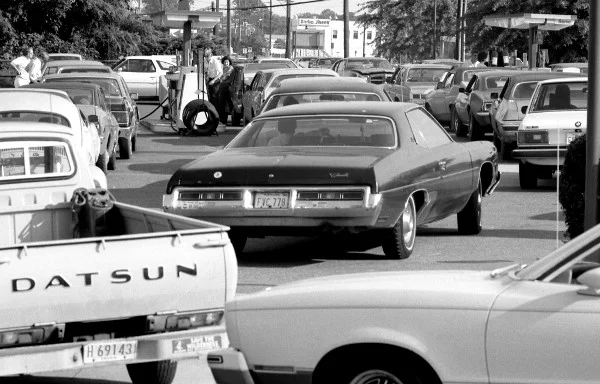
1979 by Hayan Charara
We were stopped
at a red light, I was in the passenger seat,
and a guy crossing the street looked
at the Buick, then at us
Read More
Gaza by Hayan Charara

The Most Famous Drone Pilot in America by Jacob Silverman
Every night he dreams in infrared. Five, six weeks now, the world a thermal scan of itself. The map becomes the territory. A series of targets and the not-yet-threats in between.
Read MoreThe Fifth Annual Normal Prize Winners
Winners and Finalists Announced for the 2014 Normal Prize in Nonfiction, Fiction, and Poetry
Nonfiction Winner: “Learning to Breathe,” by Jon Kerstetter
“The subject matter of "Learning to Breathe" is what initially pulls us with its heat, but what's more impressive about the essay is the way it circles back on itself and its terrible subject, its irresolvable difficulty, each time opening up to bring something else into its orbit: triage, breathing, how to consider the enemy, faith, responsibility, and focus. Yet at the center of all this gravity is the pair, binary stars, each turning around the other: am I a soldier-doctor or a doctor-soldier and how do I reconcile and negotiate the two? Read the essay.” – Ander Monson, Nonfiction Judge
Nonfiction Finalists:
“Interrogating Old Muskego,” by Jennifer Bowen Hicks
“Broken Sword,” by Matthew Gallant
Fiction Winner: “Our Mom and Pop Opium Den,” by John Jodzio
This was a really strong batch of finalists and though it was hard to choose, "Our Mom and Pop Opium Den," really stood out. The writing is so confident and clean and the story is witty, strange, and a little sad—a lovely combination. – Roxane Gay, Fiction Judge
Fiction Finalists:
“Storm Windows,” by Charles Haverty
“A Proper Bargain,” by Debka Colson
Poetry Winner: "Perennials," by Shelley Wong
Exquisitely crafted, underscored by an aching musicality, "Perennials" reminds us that regret and longing are elemental forces. Divided by oceans and silence from a beloved, the speaker's memory glitters with blossoms, arias, and fish sauce. In other words, with temporary pleasures, which remind us of the fleeting nature of all human relationships. This is a moving and startling poem. – Eduardo Corral, Poetry Judge
Poetry Finalists:
"Naubade," by Sam Sax
"Day of the Dead," by Jennifer Givhan

A Normal Interview with George Singleton
By Christina Hayes
Christina Hayes: Many of your short stories circumvent stereotypical perceptions of the South. What do you think about the recent phenomena of reality TV shows that seem to both exploit and exaggerate southern stereotypes (Duck Dynasty, Here Comes Honey Boo Boo, Redneck Millionaire)? How do you, as a writer, navigate these stereotypes in your work?
George Singleton: I was writing a whole novel based off the character Uncle Cush from the story, “Operation,” but then I saw some episodes of that show with the crazy uncle, and I realized he was a lot like Uncle Cush. I thought, damn, people are going to think I copied that dude. So I ditched the novel. (For what it’s worth, I wrote A&E last year and said I would never watch that show, nor buy products advertised in the time slot, because of the anti-everything comments from the one cast member.)
I’ve never seen the Honey Boo Boo show, or Redneck Millionaire. I’ve seen the ones about Louisiana swamps, and ax men, and mountain men. Listen, I would be willing to bet that a lot of writing done down here that never gets published in magazines has grandmas spitting snuff while rocking on the front porch, and so on. The South is diverse and complicated, let me tell you. There’s the Old South (“Wouldn’t it be great if we’d won the Civil War?!”) and the New South (“Hey, I can afford to join Augusta National now, seeing as I made all that money in textiles”). Nowadays, there’s the New New South—“I don’t play golf, but I could join Augusta National if I wanted, seeing as I invented a new way to process grits down at my low-country farm, which made me a billion dollars, that all those old codgers buy before embarking on a Civil War re-enactment.”
I try to have what seem to be stereotypical southern characters act in surprising and good-hearted ways, I suppose. Not so much that it’s beyond willful suspension of disbelief. I couldn’t pull off someone using racist terminology suddenly giving away his estate to the United Negro College Fund, I doubt. But I’ll probably try, sooner or later.
As for stereotypes, too—notice how zero of my characters, in any of my books, have used racist terminology. Goddamn. There are enough problems in the country without having characters spout off hurtful epithets twenty times per page.
CH: In Between Wrecks, most of your narrative voices are outsiders or have outsider perspectives within this rural southern culture. Why choose to have outsiders serve as narrators throughout these short stories?
GS: To be honest, I’ve never even considered it, though I guess in a way I consider myself somewhat of an outsider. Although I’ve lived in the South for 48 of my 55 years, I still feel as though I don’t fit in. I’ve never killed a deer. I read books. I don’t chew tobacco. I do like stock car racing, though. I’ve been known to drink bourbon.
Seriously, I guess most stories can be categorized as “a stranger comes to town” or “this character feels uncomfortable within the setting, for various reasons.” I guess I choose the latter, for better or worse.
CH: Your writing is often noted for its ability to find humor in pain, and Between Wrecks is no exception. Are there any particular writers you’d say influenced your interest in the grotesque?
GS: I believe in Samuel Beckett’s notion that there’s nothing funnier than human misery. And that idea goes all the way back to Aristotle: “My life might suck, but at least I didn’t kill my daddy, sleep with my mom, and finally stab my eyeballs out.” Flannery O’Connor said, “Whenever I’m asked why southern writers particularly have a penchant for writing about freaks, I say it is because we are still able to recognize one.” I think somewhere along the line she added that we not only notice them, but we put them up on pedestals.
CH: Do you think readers gain something from your close look at these “freaks?”
GS: I hate to even use the term "freaks." Not that I'm politically correct whatsoever, but everyone is a freak to a certain degree—it’s just difficult sometimes to comprehend the "inner freak" of obsession, et cetera. I think that's what I most likely hone in on with characters, both protagonists and antagonists—that they suffer from irreversible or irreparable obsessions. I'm hopeful that readers will commiserate with my characters' odd flaws.
CH: There's a lot of hidden bourbon in Between Wrecks. Each story has a character recovering a hidden bottle of bourbon from an obscure hiding spot. What’s the deal with all this bourbon? And why do people keep hiding it?
GS: It’s about one member of a relationship knowing what’s best for another member of a relationship, or about one member of a relationship knowing that his better-half’s killing himself unknowingly. Doesn’t everyone play this game? I’ve found my own bourbon in the washing machine, and I know I didn’t put it there.
George Singleton is the author of two novels and five short story collections, including Stray Decorum. A 2013 SIBA Book Award Finalist, his work has appeared in The Atlantic Monthly, Harper’s, Playboy, and The Normal School. His latest short story collection, Between Wrecks (Dzanc Books, 2014), hits bookshelves May 6, 2014.
Photo credit: wofford.edu
Photo credit: wofford.edu
In the Morning I’ll Rise Above by Joe Bonomo
Saturday night brings both pledges and lies of limitlessness, of a night never ending, a jukebox always playing, dance partners always spinning, car wheels revolving on roads that never end in daylight.
Read More
The White Death By Justin Hocking
I contracted my own White Death back in graduate school, when I was first assigned Moby-Dick, and had to wake up at five or six a.m. to swim its immense dark waters.
Read More
Three Poems By Kwame Dawes
I heard something other than
the chattering of birds in the trees,
something like the hint of music