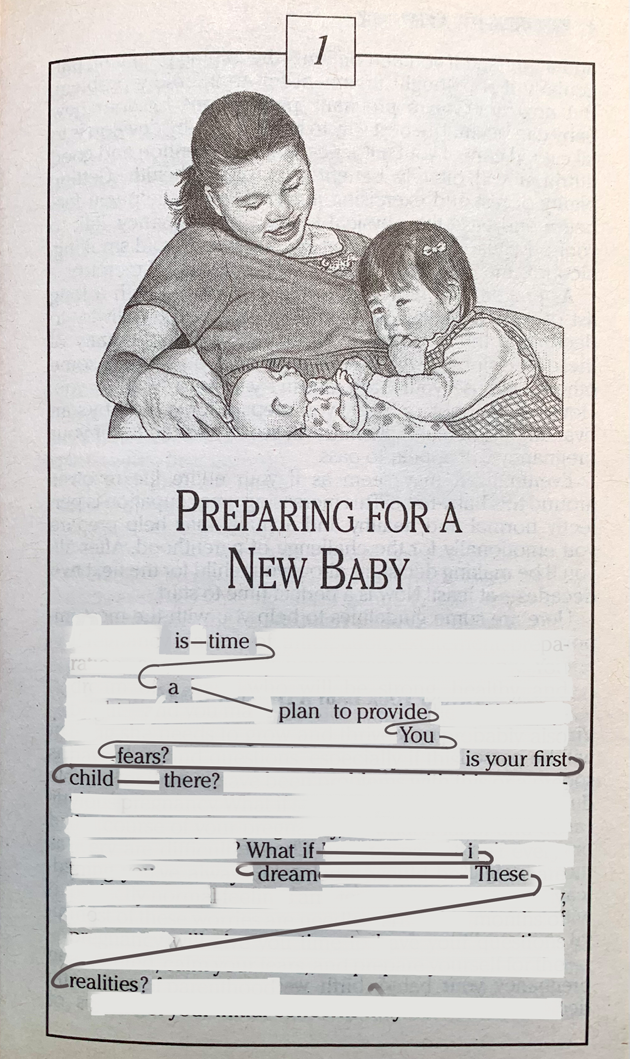
Is time a plan to provide you fears? Is your first child there? What if I dream these realities?
Kate and I lie on the floor / on the hottest day of August / letting the open cups of our armpits / runneth over.
They shot your mother and you screamed / until she explained, go back to sleep. / Allentown’s south side was a jungle, / hockshops, drug corners, always cars / “backfiring.”
There’s something about my body that doesn’t fully work alone. It must be fear, although I don’t feel like a scared person. It must be shyness, laziness. Or a sense that my body is too fragile to enter an unfamiliar space. I enjoy crossing a threshold as two bodies.
I go ambient in the fabric of the black, / a velvet dark embracing my body. // The projector flickers brief color across / the soft of it like a sky just before dusk.
When I can, I bypass / Highway 580 West through / the scorching Altamont Pass, / best remembered for a 1971 Stones concert / marred by Hells Angels violence…
It’s not like I was expecting Cher to attend my mother’s funeral. That would be crazy, like those people who send their wedding invitations to celebrities and actually think they will attend. I wasn’t crazy. I just wanted to give Cher a chance.
When your mother opened the door on you, sometimes you would daydream that she wouldn’t find you. She’d inspect each cabinet, then she’d panic and call the whole town to search for you.
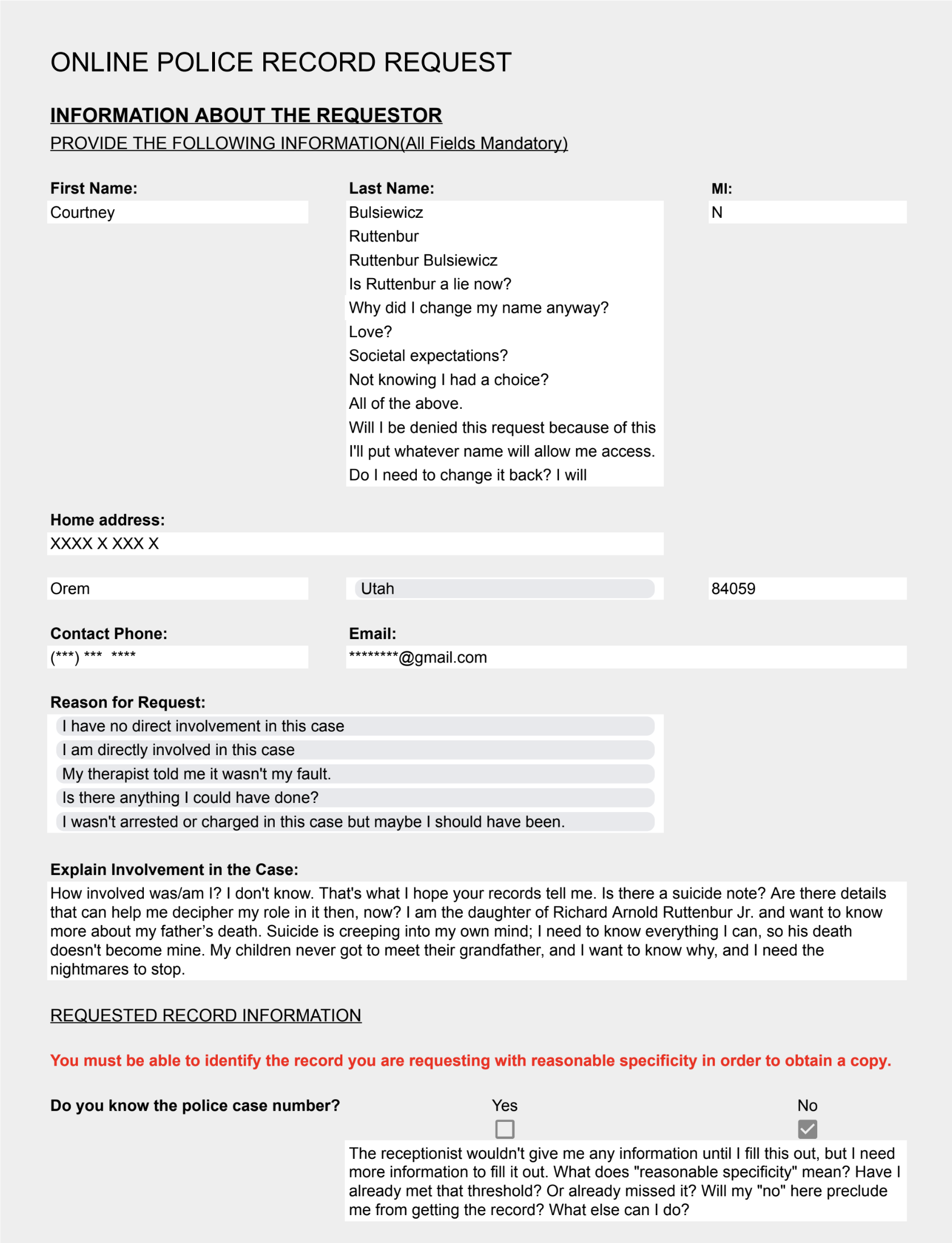
I have no direct involvement in this case. I am directly involved with this case.
Her world kept shrinking. The dream job fell through. The pregnancy failed. People left. But even after it all fell away, Tugboat was still there. She dug faster, throwing clumpy soil aside. Maybe if she made the hole big enough, she could crawl inside there with him.
What we don’t have—what we never have enough of—are people who love us, people who count us in their small, unshakable circles.
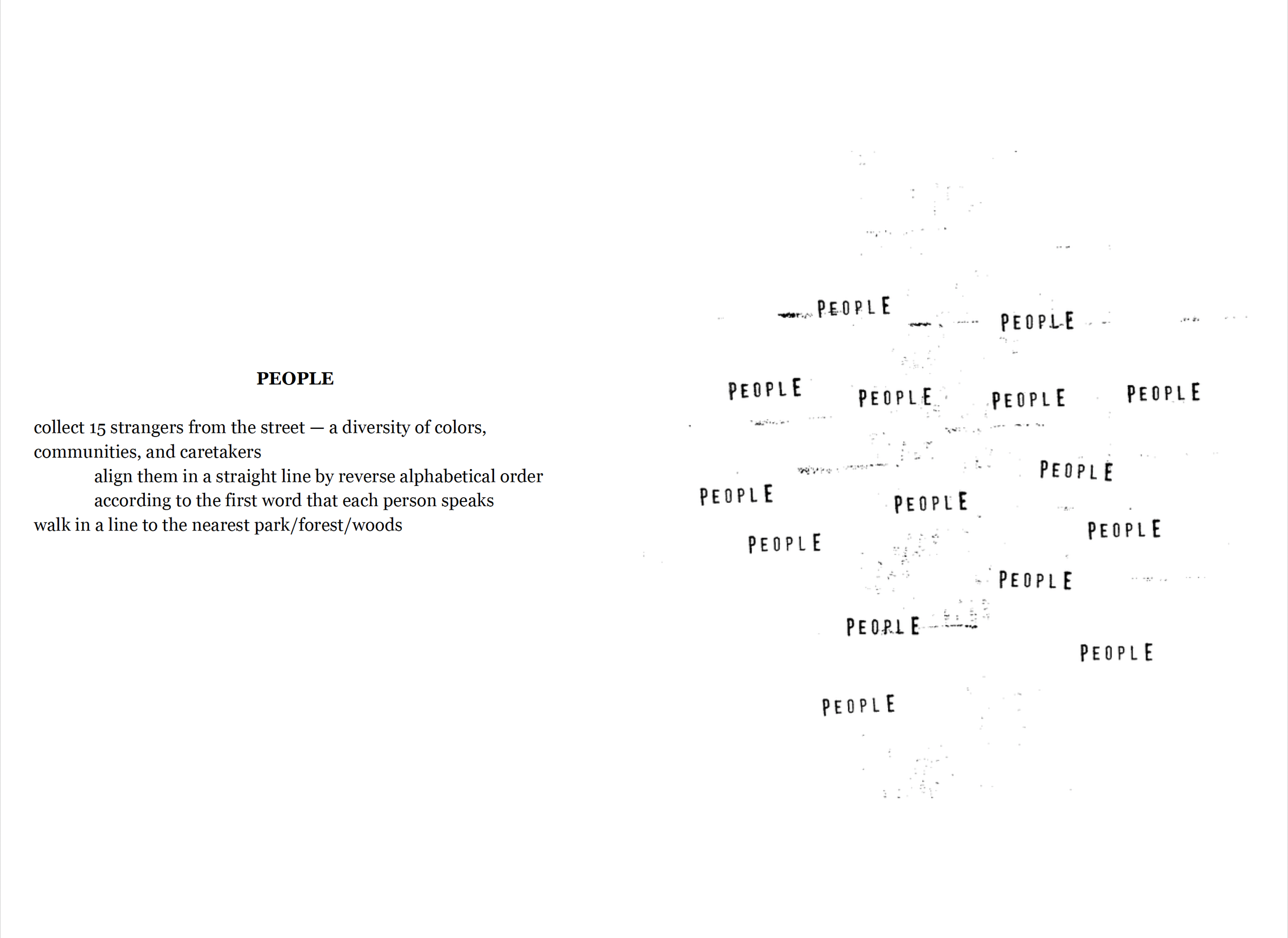
collect 15 strangers from the street — a diversity of colors, / communities, and caretakers / align them in a straight line by reverse alphabetical order / according to the first word that each person speaks / walk in a line to the nearest park/forest/woods
That was the year little girls went missing on the news, unwatched by mother eyes but net-caught in a man’s sight.
“The past is often painful terrain to go over, but individuals in each generation have to make sense of that inheritance for themselves—to acknowledge it, reckon with it, choose what to keep and what to leave behind.”
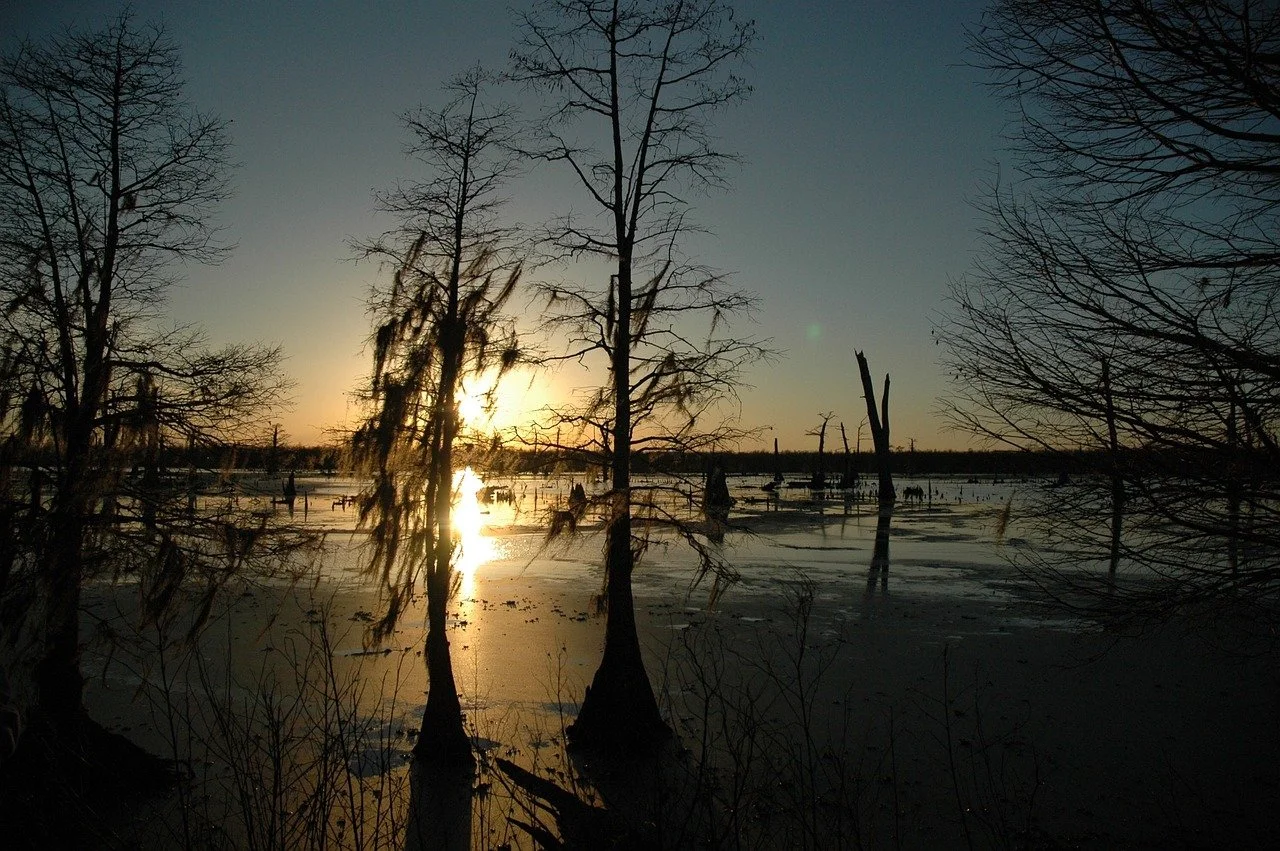
There is a difference / between happiness and scouring the bayou / for something akin.
At eighty-six, my mother’s voice vibrates— / syllables elasticize into trembling song. But it's her shuffle / that pulls me in.
...we, as listeners, are lost too. In some museums, this sound work is looped, creating a constant and comfortable lostness—everything in hyperfocus yet soft, like cashmere. For Dean, the work creates “a conceptual space where I can often reside.” We’re lost, dislocated from the familiar, embedded in an abyss.
We inhabit the blank spaces of the map.
I wept when the doctor gave me a name for what was causing / the bloated pink growths to bloom unchecked across / the field of my organs...
I’m already apprehensive about driving over a body of water when Vega grabs my elbow and whispers to me that we’re riding around in a killer's car, it’s nineteen hundred seventy seven, whole country is doing a fix, it’s doomsday, doomsday. The bridge is sturdy beneath my wheels, yet I wasn’t prepared to be behind the wheel of a runaway car…
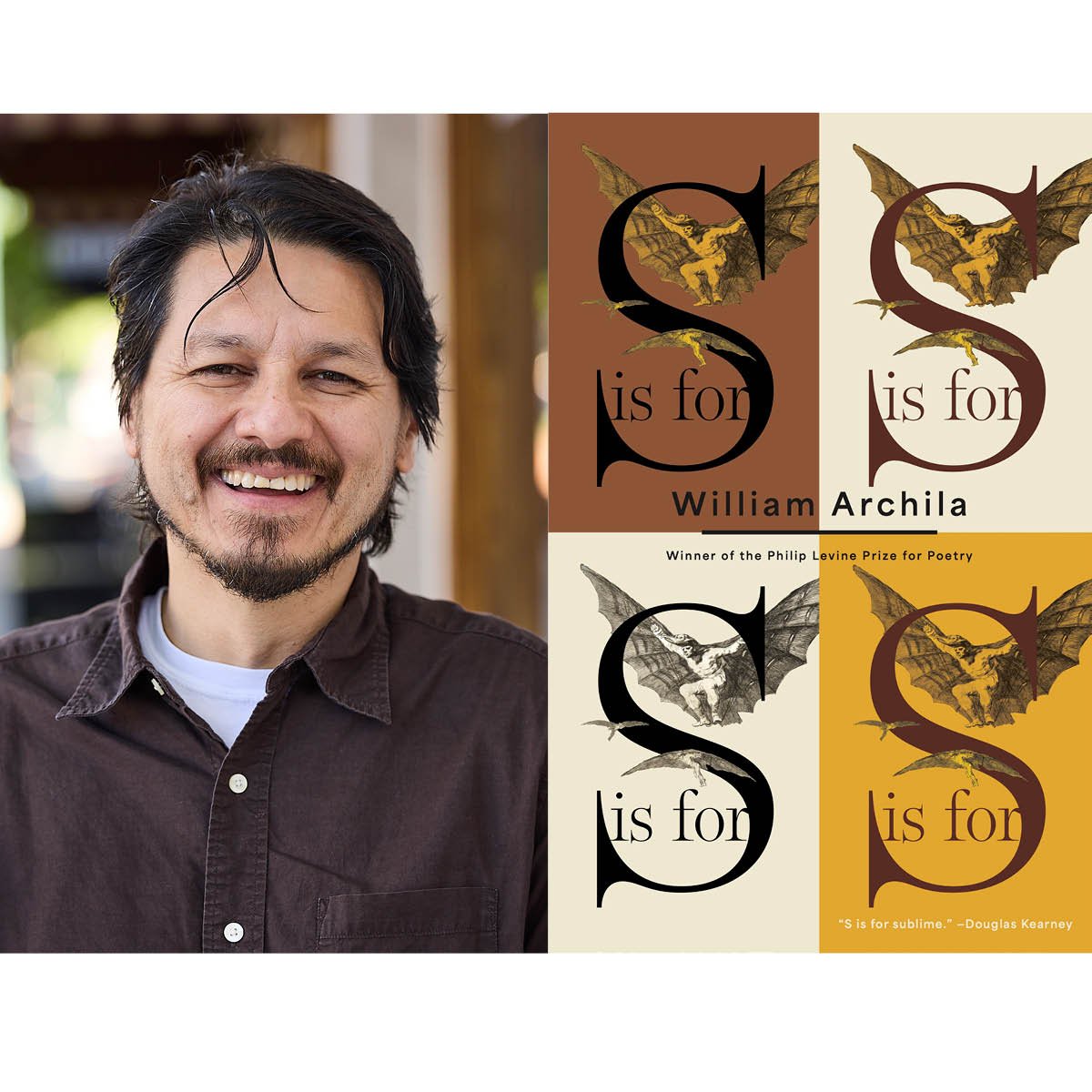
K is for Ka, face to face, / like a night guarding a pen. / That’s what we do.
Without clothes and names we would all be equals.
I am shocked by the news, though not surprised. So many people close to me have had cancer—my sister (breast) and my oldest friend (also prostate), my father (bladder). But it is a blow.
Knick doesn’t leave as much of a mess as some of them. It looks like he must have fallen asleep first, or maybe it’s just that he didn’t put up a fight. Deloris says not all of them do.
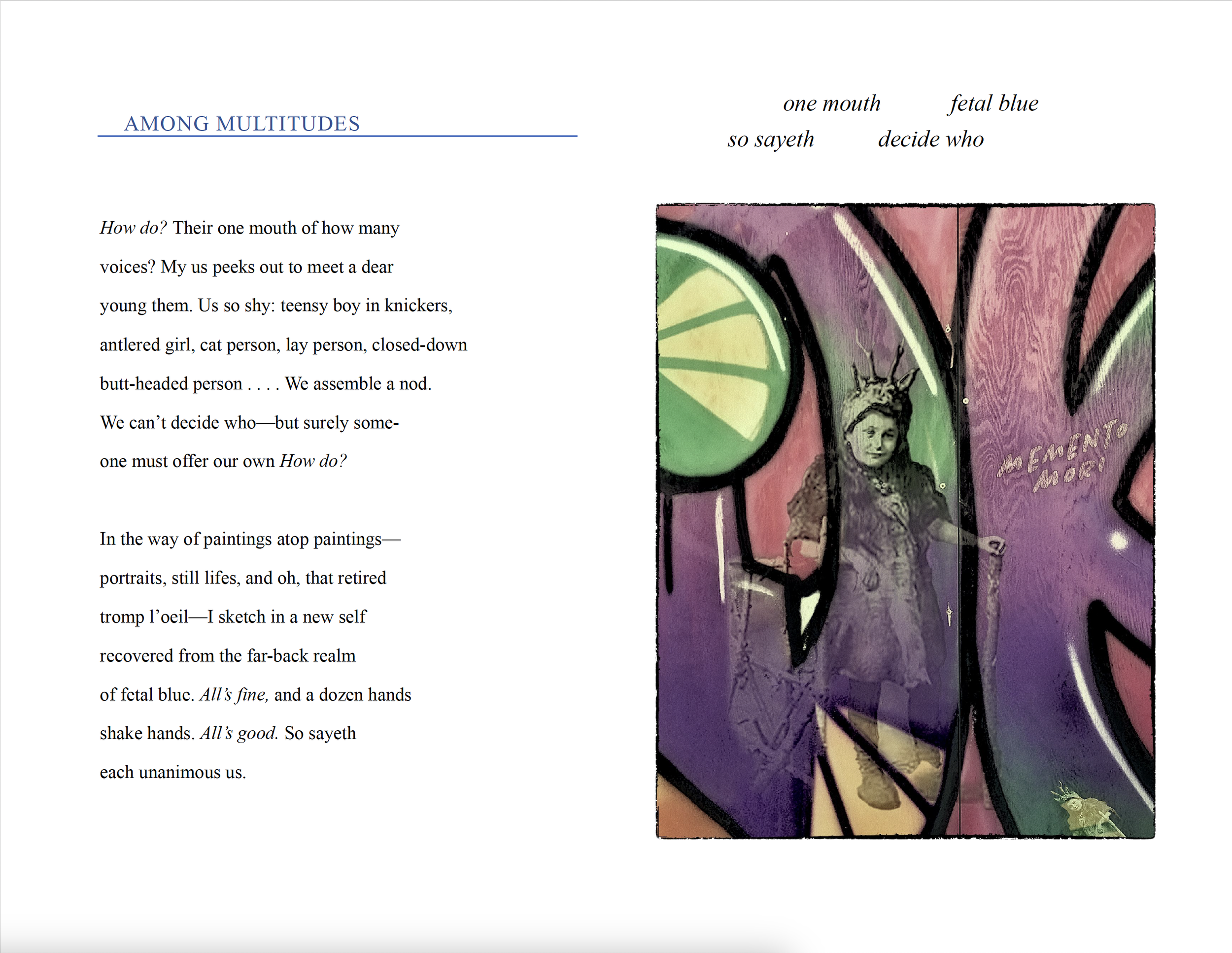
How do? Their one mouth of how many / voices? My us peeks out to meet a dear / young them.
before i was named / woman i was not / close to a real man
In the orbs of collaborative self-sufficiency that Hussein Shaheb, his mother and his wife lived in, in the permissiveness that went with accepting boundaries without distasteful confrontation and in the denial that the fatherless, adult man found himself in, he chose the entrenched tragedy of the past.
I can’t help but wonder what my life would have been like if my father hadn’t been driving through that intersection at that moment. Would I have stayed in college? Would I have been a better person? What if I had done something the night my sister woke me when we were kids?
I once believed distance meant a lack of sound, / but lately silence screams like a falling leaf. / The morning emails offer no relief, / just time zones measured in lost and found.
I figure I’m making it all up. I’ve been a wreck since he died—my appetite is erratic, my gait agitated, my posture defeated. So, sure—my psyche is probably conjuring him. But I welcome the visions because they soothe me.
Of the siblings / I can reach, one says we were lucky / to survive, and one gets stuck / repeating we were loved.
At school dances that are themed like blizzards and vampires and under-the-sea creatures, kids will hear phantom noises in bathroom stalls and other kids will scare their friends with screams. It will become generational knowledge that Johnny H. never left the bathroom stall in the hallway next to the small gym.
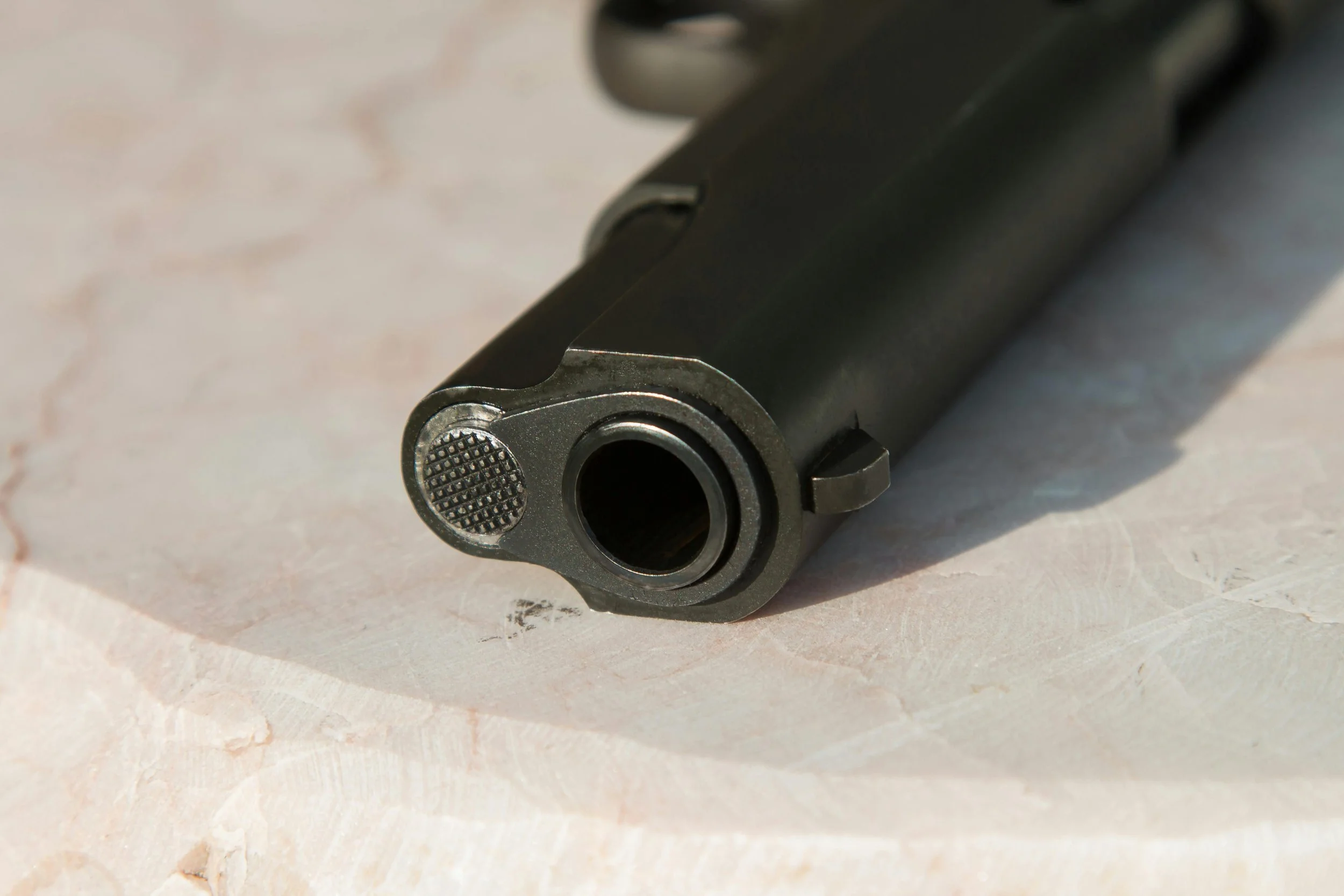
This is the first time I shoot a gun, but not the first time I’ve held one. I wish I could tell you specifics. I can tell you what I remember.
Because something is gone, that doesn’t mean that it goes away. We often clutch at stories, real or those we imagine, that can help give our lives meaning against randomness and disorder.
You stood in our living room just after your first birthday as the television played aerial footage of prisoners in hazmat suits lowering caskets into mass graves. Mercifully, you’ll have no memory of it, but your early life unfolded as death felt just there, right outside the front door, delivered by a friend's fingertips, floating on a loved one’s breath.
Some cold nights the fog tinkles against the wind- / ows and shushes along the roof like a paper bag.
[T]he argument I’m making in the book is that by resisting the narrative of inevitability offered by Big Tech companies and their CEOs and investors, we might open ourselves up to other possibilities — maybe possibilities we haven’t even imagined yet…
I wait for an arrow quiver / strike to kill my aches / & when I look in the mirror / I want to throw knives
I spent my childhood practicing girlhood, / wearing dresses that flowed around my ankles, / and stuffing myself full of honey
I walk outside and above us an open mouth / to the universe – light streaming towards us, / an invitation.
“I think grief and loss were natural themes that emerged as I wrote. Since the American War in Vietnam is such a recent event, it touches every aspect of my characters and their story. In a sense, I couldn’t have written a novel about a Vietnamese American girl going to Vietnam without exploring the diasporic grief and these complex feelings related to home and belonging.”
Barbie and Ken aren’t together much these days. Ken is often with another doll he has met. Barbie knows this, too. You could not say that “the other” is taller, or slimmer, or more beautiful than Barbie. Barbie and her look alike, except for their hair color.
They pass the Styrofoam cups of potato salad laced with dill, and sometimes go for the banana pudding shingled with vanilla wafers. That is the point, the sharing. They’ve grown tired of individuating, making protective decisions, catering to specific tastes.
I am three days into a new life. In a new state in a new town at a new elevation where there are other things for single 30-year-olds to do than attend baby showers and bridal brunches. Three days into a new life and I am sitting on a beach waiting for a surf instructor, fantasizing about his abs and our potential.
A week later and the horse is a hollow shipwreck, ribcage bared to the quartermoon. The jetsam of carrion eaters strewn amidst a palimpsest of tracks printed in the dirt.
His mother’s doppelganger reached the water first. She did not break her stride. There was no fanfare, no grandiose gesture at the miracle of it all. She simply kept walking, her gait keeping its same rhythm as her feet set onto the shifting, slurping water as it rolled in and out.
News comes back your cancer has spread, / so we go out to celebrate / you not being dead / yet.
our feet seized by quicksand / as the ocean breathes in and out / in and out / like one great pneumonic lung
I could have gone to a bar; I could have skated down to the water and lit up and watched the lake waves. I could have rented a car and driven up to Caroline’s mother’s, banged on the door, refused to leave until Caroline came out. But soon I was standing in front of Cinema 17. The marquee listed one more showing.
I, alongside him, folded every napkin in the same direction. Nudged straight the faded carpet samples that made every cement step down to the basement a different frugal pattern and color. I wished our house number—off by only one digit—was a clean 12345.
trust us. we're normal.