• Home
    • Nonfiction
    • Fiction
    • Poetry
    • Multi-Media
    • Art and Photography
    • Interviews
  • Print Archive
    • Music Column
    • Pop Culture Issue
    • Anthology
    • Who We Are
    • Submit
    • Contact
Menu

The Normal School

  • Home
  • GENRES
    • Nonfiction
    • Fiction
    • Poetry
    • Multi-Media
    • Art and Photography
    • Interviews
  • Print Archive
  • Special Features
    • Music Column
    • Pop Culture Issue
    • Anthology
  • About
    • Who We Are
    • Submit
    • Contact
 
 
2016-02-04-hair-Guiol.jpg

Hair by Carmella Guiol

February 4, 2016

My hair speaks the language of conquistadors, the cousins of Columbus.

But it doesn’t tell the story of frijoles negro and yucca frita, ropa vieja and abuelas. My hair can’t tell you about my mother, age nine, boarding a plane with a doll in one hand and her brother’s palm in the other, destination unknown. My hair doesn’t tell you what my first words were after “Mami.”

Read More
In Nonfiction Tags Carmella Guiol, Nonfiction, Hair
2016-01-28-Kuryla.jpg

Not in Nottingham by Mary Kuryla

January 28, 2016

While my hostess sat across the glass kitchen table fanning away the smell of diarrhea exploding from one of two recently adopted kittens mewling on the other side of the screen door, while my six-year-old son, also on the other side of the screen door, finally took the turn he’d never been offered to mount his friend’s toy arrow in a bow, while the boy he’d come to play with, the boy named after the Hindu principal of cosmic order, abandoned my son in favor of his brother, I began wondering why I’d agreed to take a kid like mine on a playdate.

Read More
In Fiction Tags Mary Kuryla, Not in Nottingham, Fiction
Sam Pierstorff

Life without Power Steering or How a Muslim Family Parks by Sam Pierstorff

January 15, 2016

The engine never failed on our mother’s rusty 1962 Studebaker Lark that drooled puddles of oil onto our driveway and shot black smoke from the tailpipe like an old musket, but most days I hoped it would so that my mother could shoot it dead like a crippled horse, and my brother and I could take the school bus instead.

Read More
In Nonfiction Tags Sam Pierstorff, Nonfiction, Life without Power Steering, How A Muslim Family Parks
Two Poems by Rachel Inez Lane

Two Poems by Rachel Inez Marshall

January 15, 2016

I read someone stole a frieze from Santa Croce

over the weekend. And given my sense of Florence

or elsewhere is less than impressive, I thought maybe

you and the thief may have passed on the street.

Read More
In Poetry Tags Rachel Inez Marshall, Poetry, Dear Bat Boy, Meanwhile in Florence
Ambrosia Terrance Flynn

Ambrosia by Terrance Flynn

December 10, 2015

As a freshman in the mid-1980’s, I acquired a reputation no college student really wants—that of a good listener. Lacking a love life of my own to speak of, I was doomed to hear others go on about theirs. By second semester, I feared succumbing to the fate of a eunuch, which I imagined was a slow death caused by constant exposure to second-hand romance.

Read More
In Nonfiction Tags Terrance Flynn, Nonfiction, Ambrosia
Tschirgi.jpg

Two Poems by Katrin Tschirgi

December 8, 2015

I'm tired of being cute. On Tuesday,

I wore nothing but an apron and dismembered

an orange as though it were an oyster

or a man.

Read More
In Poetry Tags Katrin Tschirgi, Poetry, Saint Sin, Catch & Release
Felicia Zamora

Three Poems by Felicia Zamora

December 3, 2015

Fingers to keyboard, cyber-minded

when the photo hits your inbox—

Hexagons burnt into wood: a pattern

innately inside the bee, graffiti-ed

by human hands.

Read More
In Poetry Tags Felicia Zamora, Poetry, Picture of the Hive, Alone at the Lake, In Hush

Bafflement, Clarity, and Malice by Joe Bonomo

December 1, 2015

How can something I don’t understand come to mean so much?

Read More
In Print Tags Joe Bonomo, Bafflement Clarity and Malice, music, nonfiction, 2015 fall vol. 8 issue 2, throwback, Archive
2015-10-29-Four-Poems-Handal (1).jpg

Four Poems by Nathalie Handal

December 1, 2015

I asked you not to hurt me
the way history did

Read More
In Poetry, Print Tags Nathalie Handal, 2015 fall vol. 8 issue 2
Sarah Bates

Why Some Animals are Sexier than Others by Sarah Bates

November 26, 2015

This is not a poem about feelings.

This is an essay about six white rhinoceros. Six white rhinos and the misunderstanding of a mixtape.

This is not a poem about you making me a mixtape.

It’s an essay about the fastest routes to God. Frank Sinatra, the Bronx Zoo, and week old pots of coffee with the light still on. God.

Read More
In Nonfiction Tags Sarah Bates, Nonfiction, Why Some Animals are Sexier than Others
Annie Woodford

Three Poems by Annie Woodford

November 19, 2015

Prisms spin in the hardwood floor.

My daughter glides and chops, skate-shod,

Her little girl legs a perfection of knees and narrow thighs.

Read More
In Poetry Tags Annie Woodford, Poetry, Errancy, 110 Beats, Wide Enough Spaces
2015-11-12-Epigenetics-Epstein (1).jpg

The Epigenetics of Barbie: a short story by Ann S. Epstein

November 12, 2015

My five-year-old niece June wears a 24-E bra. Not to play dress-up, but because she needs one to support her breasts. Mellie, who is my sister and June’s mother, blames me because I gave June a Barbie doll two months ago. That’s when her mammary development began. You see, my niece has been assuming the characteristics of toys and games since she was born. For example, her eyes took on the Calder-like shapes and swivel movements of the wind-up mobile above her crib.

Read More
In Fiction Tags Ann S. Epstein, The Epigenetics of Barbie, Fiction
Alia Volz Oracle

Oracle: a short story by Alia Volz

November 5, 2015

I cannot make you understand how much I love this place. I love our houses the color of sand, so you can look over the town from up on Mt. Lemmon and almost miss it. I love that everyone knows my name. When I walk into the Oracle Market, Will Whitby says “Hey, Maxine, how are the boys?” Our families go to the same church. It seems like we all did when I was a girl.

Read More
In Fiction Tags Alia Volz, Oracle, Fiction
2015-10-22-Three-Poems-Seroussi.jpg

Three Poems by Dahlia Seroussi

October 22, 2015

My mother’s womb

was a kiln

and it burned me.

Read More
In Poetry Tags Dahlia Seroussi, Poetry, Warning, Time Lapse, Delicate Cycle
2015-10-20-Death-by-Refrigerator-Hollars.jpg

Death by Refrigerator by B. J. Hollars

October 20, 2015

When inventor Oliver Evans first conceived of his “refrigeration machine” in 1805, he never dreamed it could be a killer. He, much like Jacob Perkins and John Gorrie (both of whom would soon improve upon the design), dreamed simply of extending the preservation properties of food.

Read More
In Nonfiction Tags B. J. Hollars, Nonfiction, Death by Refrigerator
against-travel-Deuel

Against Travel by Nathan Deuel

October 15, 2015

So deep was my sleep on a recent flight from Moscow to L.A.— a complete darkness, as if I was where I should be—and yet when I opened my eyes, seeing instead the hard light of a plane and not that place I suppose I hoped I had finally found, I clenched my teeth, it having become clear yet again that we were neither here nor there, and it was with a bit of anger, some disappointment, and not a little bit of regret that I found myself thinking again about the Rome of a day before as much as I was anticipating the heat of the California I’d see tomorrow, all the while attempting to forget a Phnom Penh that had started it all, not to mention the various cities in between that my wife and I had tried and failed over 15 years of roaming—this long and more or less continuous effort to make some place the place.

Read More
In Nonfiction Tags Nathan Deuel, Nonfiction, Against Travel
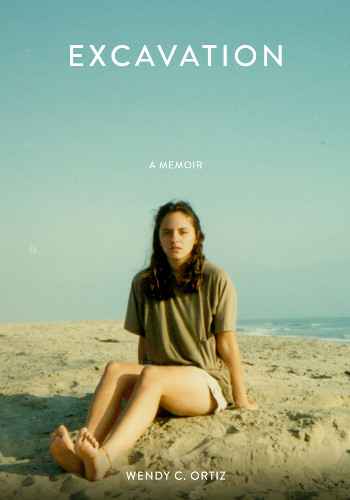
Hollywood Notebook is a prose-poem memoir that bends the creative nonfiction genre. Initially started by author Wendy C. Ortiz as blog called Lab of Lux in the early 2000s, Hollywood Notebook meditates on the mundane, explores struggl…

Hollywood Notebook is a prose-poem memoir that bends the creative nonfiction genre. Initially started by author Wendy C. Ortiz as blog called Lab of Lux in the early 2000s, Hollywood Notebook meditates on the mundane, explores struggles of the working class, and ruminates on love and friendships. Ortiz’s memoir is a look into your forgotten twenties; her prose whisks you back in time, to a time where moments slow down and everything in life seems possible. Ortiz is also the author of the 2014 memoir Excavation and she wrote the year-long monthly column “On the Trail of Mary Jane” about medical marijuana dispensary culture in Southern California for McSweeney’s Internet Tendency.

A Normal Interview with Wendy C. Ortiz

October 8, 2015

By Jackie Huertaz

Jackie Huertaz: What I liked about Hollywood Notebook is that each story is crafted like a snapshot, or vignette, about minor mundane day-to-day details from a working-class perspective. But it’s also how these commonplace experiences function on a much larger scale. I related to your reality, such as the two-hour commute to work, struggling to pay bills while juggling school and work. You write about “the struggle” and that is something that I appreciated. So, I’m curious to know if that was your intention – to intentionally incorporate snapshots of a “working-class struggle” to your audience?

Wendy C. Ortiz: It’s a natural process. It’s writing about my experience at that moment. My experience in L.A. differed from living in Olympia, Washington. In L.A., I was paying three times my rent and there was a lot of struggle. A lot of struggle. I was faced with questions like, “Am I going to be okay?” Still, I had health insurance, yet there was this looming feeling that at any given time, I’m one payday from being in a very messy situation. To me that was the experience I was going through, and it wasn’t my intention, but it was just true to my experience.


JH: Which authors from the creative nonfiction genre do you draw inspiration from?

WCO: I probably answer that differently day to day. There are a few books that are touchstones to me that I keep coming back to. The inspiration I got for Excavation is a book called The Chronology of Water by Lidia Yuknavitch. I highly suggest this book. It takes on the memoir genre and completely turns it upside down. Yuknavitch calls it an anti-memoir, which I find completely fascinating. Yuknavitch takes on very personal, intense stories. Call it dark; there is this kind of openness to her writing that gave me the permission to write my personal stories. Her book made it possible for me to discuss something difficult in my life, and gave me a feeling that I can do this, I can put this out there. While writing Hollywood Notebook, I drew inspiration from poetry by Amy Gerstler, the journals of Sylvia Plath, and essays from Anne Dillard.


JH: The first book by a Chicana from creative nonfiction that I had the privilege of reading was Mexican Enough by Stephanie Elizondo Griest. She explores identity, but I felt more connected to your prose style and experience. I feel the same way – my reading fluctuates day to day – and I find myself intrigued with immersion journalism right now. According to an interview with Electric Lit online, Hollywood Notebook initially started out as a blog. Do you use social media as part of your writing process?

WCO: Yes, “Hollywood Notebook” started as a blog formerly known as Lab of Lux. I wrote it in my twenties from 2002-2004. I never had any intention of turning the blog into a book except when I received a call from a friend, letting me know Lab of Lux was going to be removed. I used the blog similar to how I use Tumblr now, to generate and capture ideas. So, I kept all the text, and I thought, well, I did all this writing, so I might as well keep it. But Tumblr is a great resource to facilitate, and I also journal at least two or three hand-written pages every day. Every morning. It’s important for me to do that every day to be productive, especially if I’m not going to do any other writing that day.


JH: Yes! I want to start journaling! I don’t know why I don’t do this. I’m always curious too about a writer’s writing process. Where do you write? Do you give yourself deadlines?

WCO: My writing process really varies. When I have an idea, I sit on that idea for literally months, trusting that it will still be there. But in the meantime, I’m still thinking about it, and the idea will usually surface when I’m hiking, and that is when the vision, structure, and direction will come together. But I spend about three to six months just processing the material in my head. However, when you have deadlines with publishers and commitments to journals, you are not actually writing what you want to be writing, and that’s the reality for most writers. It’s not having the time to write and explore what you want to write at that particular time.


JH: In our genre there are hardly any female, Mexican American writers that I have been exposed to. I remember meeting the late Michele Serros for the first time. It was such a big deal for me. She was doing it, and you’re doing it. It makes it possible for someone like me to say, I can do this. Who was the first Mexican American author that you read and gained inspiration from? How have they impacted you as writer?

WCO: The first piece of writing I was exposed to was The House on Mango Street by Sandra Cisneros. I had the “Oh my God” moment because Cisneros is someone who is a part of an experience that I am familiar with. I definitely don’t have the same stories Cisneros describes in the book. However, there is a familiarity there because at the time I wasn’t receiving her experiences in anything else I was reading. I immediately felt attached to her. After that I became acutely aware that I wasn’t being exposed on my own to any Latino authors. So, at Evergreen State College, I put together a list of Latino authors and created an annotated bibliography. I needed this. No one else was giving me this, so I took it upon myself.


JH: As a student in an MFA program, I have been labeled a “Chicana writer.” It is a label I struggle with, because I don’t want to be separated from other writers. However, sometimes I embrace this label because I’m proud of my culture. I’m curious to know how you feel about the label. Do you think it hinders your writing? Or does it divide us as writers?

WCO: How you just described yourself is how I would describe myself. I constantly feel like yes, I’m proud of being Chicana. In a place like L.A., people know what Chicana means. However, outside L.A., typically most people do not know what that means, so you become an explanation of something. And that’s what I don’t like, having to explain my identity. Some people will see it how they want to see it, or won’t see it at all. As a writer, I’m going to put my best writing out there and people are going to make it however they want.


Wendy C. Ortiz lives in Los Angeles. She’s the author of the forthcoming Bruja from Civil Coping Mechanisms in 2016. Her work has appeared in The New York Times, Hazlitt, Vol. 1 Brooklyn, The Nervous Breakdown, The Rumpus and Brain, Child Magazine, among others. She co-founded the Rhapsodomancy Reading Series, which she has curated and hosted since 2004. Wendy is a parent and registered marriage and family therapist intern.

Jackie Huertaz is the 2014 Andrés Montoya Scholar at California State University, Fresno, and she is currently a second-year MFA student there, studying creative nonfiction. She holds a bachelor’s degree in English.
In Interview Tags Wendy C. Ortiz, Excavation
Newly released from Manic D Press, Myriam Gurba’s short-story collection How Some Abuelitas Keep Their Chicana Granddaughters Still While Painting Their Portraits in Winter reads like a darkly comic kaleidoscope of children, monsters, violence, and …

Newly released from Manic D Press, Myriam Gurba’s short-story collection How Some Abuelitas Keep Their Chicana Granddaughters Still While Painting Their Portraits in Winter reads like a darkly comic kaleidoscope of children, monsters, violence, and cross-border feminism. The interconnected stories lure readers into the recesses of neo-gothic landscapes, both real and imagined. Gurba is also the author of Dahlia Season and the poetry collections Wish You Were Me and Sweatsuits of the Damned.

A Normal Interview with Myriam Gurba

October 1, 2015

By Monique Quintana


Monique Quintana: Family, women in particular, seem to be the pulse of your new short-story collection. How did you come up with the title, How Some Abuelitas Keep Their Chicana Granddaughters Still While Painting Their Portraits in Winter? It’s also the title of the first story in the book.

Myriam Gurba: It’s kind of tongue in cheek because it’s so long and pedantic, and it delves into the heart of the story immediately. This grandmother who’s capturing and creating culture through art and folk art, I think, links all the stories. That’s why I appreciate the title so much, and I also really wanted to evoke the identity of the Chicana in the title, to ground the short stories in a canon of Chicana literature.


MQ: I did see that first story as an interesting means of entering the collection. I immediately saw the family thread, but I also saw that it would be very female centric, which I appreciate. I myself have fond memories of my mother and grandmothers telling me really sinister stories, mostly to keep me out of trouble. Who were the storytellers in your own family and what did they teach you about story?

MG: The storytellers in my family were mostly women, and the storytelling that happens in my family tends to be the strongest in Mexico. When I was a kid I would get to go to Mexico a lot more frequently. The generation of storytellers is dying; we’re losing them year-by-year. But I do have an aunt who loves to host gatherings. She’ll put out wine, and everyone will sit in a circle, and the elders will take turns spinning yarns. One of the fun parts for me is that they’ll each have their own version of a story, so one will tell their version of the story, and then another will contradict her, and say, “No, you got it wrong, here’s the real version of the story,” and that will provoke a new story, and you could be there for hours fully entertained by storytelling. Their storytelling tends to be really melodramatic, kind of spooky, but also funny. Those are my favorite flavors in storytelling. My dad tells a lot of stories too, and so immediately in my household, that’s where a lot of stories came from, from my father. He’s more of a formal storyteller than the sort of folksy, natural, organic storytellers.


MQ: I definitely saw elements of chisme in the collection, a merging of the grotesque with humor. I want to talk a little about your first book Dahlia Season. I do see the differences in the collections; of course, the first being that Dahlia Season is a collection of short stories and a novella. When I read that book, it felt very much like a lament for L.A. The narrator is the first story “Cruising” talks about what a real California beach looks like. I was really taken with that whole idea. Living in California’s Central Valley, a lot of people get surprised when they visit. It seems to shatter their preconceived notion of California. Can you elaborate on the idea of a “real California,” and what kind of California you are most interested in writing about?

MG: I’ll start by saying that I have a lot of different muses that influence my work, and one of my chief muses is California. I love California. To me, California isn’t so much a place, as it is a spirit or an entity. I’ve always had this intense relationship with California. I remember being a little girl on the playground after it rained and smelling the earth, smelling California, and loving the smell, and finding it so delicious that I was compelled to put dirt in my mouth because I wanted it to be a part of me. I would pick rocks off the ground and I would suck them because I wanted the flavor of the earth so much; I seriously wanted to consume it. I’m in love with California.

I don’t ever want to leave California. I’ve been all over the United States and nothing compares to California, and I have fantasies about dying in California and being buried here, so I can become part of it physically. California is dazzling because it’s so many things simultaneously. It holds so many worlds that other regions of the United States cannot. Other places cannot contain these concentric universes. L.A. County alone holds universes. If you travel block to block, neighborhood to neighborhood, the change that you can see geographically and ethnographically occurring is wild. In Long Beach where I live, we have a block that is entirely populated by Cambodian refugees, and then the next is Black folk, and the next block is Mexican families, and one Salvadorian family, and a Japanese family. Our state is so culturally rich; and not only that, it’s also geographically rich. Everything that you want geographically you can find in California. Any geographic encounter you would want to have, you can have it in California, and it’s within driving distance.


MQ: California definitely feels like a microcosm of the universe. I was really taken with that concept in Dahlia Season, the real California vs. illusions of California. You continue the idea of illusions in Painting Their Portraits in Winter. As a reader, I was constantly questioning what is real and what is not. This book seemed to me like a lament for those living in the in-between. We see that happening in Dahlia Season, but it’s further explored in the new book. We really see the conflicts that arise when different generations of family come together. Borders, both literal and metaphorical, punctuate these stories. Can you talk about how the characters in the book live in those marginal spaces?

MG: You’re definitely on to something in describing the liminal spaces that exist for the characters and creatures in the book. I think a lot of the stories read as myth and allegory. Myth is rooted in reality, and an attempt to explain reality by using truths to enter the world of fiction. Myths really straddle fantasy and reality in that sense. Myths are not fully real, but they are an attempt to explain the world as it is. Myths and allegory run through a lot of the stories. As you were saying, the book is really woman centric. I don’t think I did that intentionally, but I appreciate literature that puts men on the periphery. Frequently in literature, and in film, we experience creation through the male gaze, but to me, the female gaze is much more compelling. It’s something that I relate to far more. This collection is written from the female gaze. You’re forced to experience things from the female gaze to engage with the stories. If you identify as a woman, you are automatically in a liminal space, you are automatically marginalized, and so the liminality becomes a byproduct of all the stories. Female creatures that are non-human also populate the stories. The sort of fantastical quality of some of the creatures, like the Aztec demons, gives them an even greater sense of liminality, and those creatures reside in a space of liminality, that sort of Goth in-between space that Gloria Anzaldúa wrote about so evocatively in Borderlands/La Frotera: The New Mestiza.


MQ: I really liked how children are characters in the story. Children’s voices are always stifled in society. These are also children that will grow into women. As female children, we see the many intersections of marginalization. We see how the female body is made into a monster. Two of the characters are very young sisters. So, with that, I was pleasantly surprised when I realized that the stories are connected and working within the same family. How did go about arranging the stories as they appear in the book?

MG: I’m going to talk a little bit about children and mothers, and then go into how I arranged the stories. I’m typically really annoyed with writing about children, and writing from the point of view of children. Typically, it feels so sanitized, and doesn’t treat children as fully realized characters; they tend to fall flat. They tend to be dancing around children’s capacity for evil, or their burgeoning sexuality, or their banality. Children have those things too. They tend to be idealized in literature, and they don’t have fully embodied voices. I really wanted to experiment with that idea through characters. In transitioning to a conversation about mothers, I wanted to explore the grotesque relationship between mother and child, and I also wanted to explore the concept of the childless woman, or the barren woman. She’s somebody who is misunderstood, or treated as unnatural, and I wanted to take the childless woman, the barren woman, and the woman who killed her children, and sort of normalize her, and put her at the forefront of the story, so that the reader could empathize with her, so she’s not this strange thing or this monster, that her monstrosity is normal; her monstrosity is something that could become acceptable as a reader. Typically, in media, women who kill their children are presented as violating the ultimate taboo, but women violate this taboo every day. So it can’t be that taboo, if infanticide by mothers is so common. So, that’s why I was drawn to writing about motherhood in that particularly vile and grotesque way, and in a destructive way.

As far as the order of the stories, I instinctively felt like the story with the grandmother teaching her granddaughters should go first. I staggered the stories according to tone, because I wanted different notes to be struck, so the stories could play of one another in an almost musical way. The first story is epic in a small sort of way, and the next story to me is a sillier, funnier, smaller story, and the next story, “E = MaChismo2” is spookier and gets sad, and “Georges Bataille Look Into My Eye” is funny and silly. I wanted to provide the reader with some breathing room, instead of stifling them with the same tone over and over again; give them different tones so they could take a break from the spooky, so they could go to the funny, and then take a break from the funny, and go to the mythic, and then go from the mythic to the folksy. I think I was paying most attention to tone in the organization of the stories.


MQ: It made me think of when I was a kid and my family was really into horror films. We’d watch something like The Texas Chainsaw Massacre, and then we’d watch something funny so we could get to sleep that night. That marriage of the macabre and comedy seems to be ingrained in the Mexican-American family. That was something I noticed about the arrangement of the book. I always got a respite from the horror, which I found compelling and it kept me reading.

MG: We usually think that tragedy and comedy are opposite sides of the mask, but to me, the relationship between horror and comedy is much tighter. To me they’re almost the same thing, like fraternal twins. If you push horror a little further, it becomes comedy.


MQ: It does seem that all comedy stems from laughing at the miseries of other people.

MG: All comedy is a violation; it’s a breaking of a rule. The more breaking of a rule, the funnier something is. That’s also what horror is, the breaking of a rule. I think the horror in my work is influenced by southern gothic literature, where the horror and grotesqueness is disturbing to some readers, but there are also readers who find the humor in it, because it’s so hyperbolic. I have started to think of Painting Their Portraits in Winter as an apo-gothic book, as a Chicana gothic book.


MQ: I definitely see echoes of Eudora Welty and Flannery O’Connor in the book. What I appreciate about your book is that it’s relevant to my experience as a woman of color, so thank you for that. I’d also like to ask about the form of the book. You’ve written poetry, short stories, flash fiction, and a novella. I think that you could make the argument that Painting Their Portraits in Winter could be called a novel-in-stories. How do you decide what form you want your fiction to be called?

MG: I’ve heard from a couple of people who explained that because of the reemergence of the characters, the collection reads like a novel in a very odd way. It wasn’t necessarily my intention to do that, but I liked that that occurred accidently, and I think it adds a complexity that I didn’t realize to the work as a whole. My publisher identifies my work as belonging to a sort of literary form. I find it really hard to discuss what form a lot of my writing takes. As you’ve said before, my characters are very liminal and I see my form as very liminal too. A lot of my stories exist between forms. Something that may seem to be flash fiction could also be interpreted as a prose poem.

I’m challenged by that question. I think that a lot of my writing is hybrid writing, and I haven’t developed the language to classify what it is that I do. I like that about writing. It makes me feel free. I don’t have to conform to any sort of length, or style. I let the story tell me what it is. A lot of that is instinctual. I’m a very emotional and instinctual writer. I know there are other writers who are more cerebral, who will plot and structure. I can’t do that. I find my writing becomes very stiff if I try to give it a skeleton. The way that I visualize myself writing is like when you watch a wasp or a bee building a home with that weird cellulose. It looks like they’re vomiting and they soon they have a hive. That’s how I visualize myself writing. It’s like I’ve been vomiting material and before I know it, I’ve created the structure. I’m thinking, it’s inhabited now, and I didn’t think it was going to look like this, holy shit.


MQ: Connected to the idea of form, I’d like to explore the idea of audience. Your story, “Chihuawhite,” is about a Mexican Goth girl, a Moth. I really connected to that story. I’ve been reading Anne Rice since the sixth grade, and my closet has been a black hole for as long as I can remember, so I totally got that girl. What effect does your audience have on how you craft characters? Are you writing with a particular girl in mind?

MG: Sometimes I do, and sometimes I don’t. I usually feel like I’m just writing for myself. I’ll get really taken by an idea, and I’ll become obsessed, or fall in love with the idea. Something will really disturb me about the idea. When an idea gets that kind of emotional response from me, I can’t rest until I do something with it. There is also a particular kind of reader that I do write for. It’s a version of myself that I know exists, because I’ve seen them multiplying. It’s a girl or a woman, who’s Latina, nerdy and bookish, and has a tradition of macabre, not only from her culture, but from just growing up as a girl. Sarah Silverman once said, being a woman is like living in the world’s slowest horror film. You experience horror over and over and over again. That’s the girl I’m writing for. The one who has invested interest in those things. I imagine myself and the girls I knew who would hole up in their room, and burn candles, and paint their fingernails black, and listen to creepy music, and want to read a book about somebody like themselves having adventures, and not finding anyone like that in literature because there are so few characters that are nerds of color, especially female nerds of color. I feel like the big book about a nerd of color was The Brief and Wondrous Life of Oscar Wao by Junot Díaz. I thought, holy shit, this is a book entirely fixated on the nerd of color.


MQ: That book definitely lingered with me too. We don’t usually get a lot of intelligent characters of color in white narratives. Ultimately, it takes a person of color to write about that nerd of color experience.

MG: Another writer that does this is Felicia Luna Lemus. She writes about nerds of color. Another person is Christy C. Road. She does graphic novels. The thing about Junot Díaz’s work is that although it’s beautiful and amazing to read, you’re constantly getting slapped with his dick while you’re reading.


MQ: [Laughs] Yes, it’s very male centric.

MG: If you’re willing to push the dick out of your face, and then prepare for that fact that it’s gonna come slap you again, then you can be at peace with his work. But’s that’s going to happen. There’s this super macho element that you have to be willing to stomach.


MQ: I’d like to return to the idea of ghosts as female figures, like the looming figure of La Llorona. Ghosts are very pervasive in the collection. What do you think makes for a good ghost story?

MG: One of my favorite things in the world is to hear good ghost stories. I urge people to tell me ghost stories. If there’s a context for telling stories, like a blackout or a lockdown, I’m always the person that says, “Let’s tell ghost stories.” If we’re all experiencing hyper-awareness, then the story becomes that much better. I love all kinds of stories. I especially like ghost stories that involve female ghosts and ghosts that carry some kind of message, because then the stakes are heightened. Ghosts with a message are a key ingredient for a ghost story, and also a ghost that brings with it an element of danger and death, a ghost that’s an omen for impending tragedy. Then we’re wondering when that tragedy is going to affect the characters in the story. The first ghost I was introduced to was La Llorona, so she occupies the highest stake in my mental pantheon on ghosts.


MQ: She was definitely my first, too. So, I love how your stories are imprinted with women who are icons of Chicana feminism like La Llorona and Frida Kahlo. I’ve personally come to view Kahlo as a modern day La Llorona because her art speaks to the immense pain of being a woman and living in the in-between. Traditionally, La Llorona has been perceived as the bogeyman of Mexican culture. How do you think your stories complicate this idea?

MG: In the story “Chaperones,” women’s destructive nature is celebrated as much as women’s creative nature. I feel that the destructive nature of women in downplayed and not honored, and I wanted to honor a woman’s capacity for violence in that story. When people tell their children the story of La Llorona, it’s very much a warning: “behave, or you’ll encounter this woman.” I wanted to represent the encounter as something potentially exciting for people. The character who’s narrating “Chaperones” is describing her excitement, wondering if La Llorona could be the psychopomp that takes her into another world, and maybe that passage could be pre-death, but maybe that passage could be something macabre, but exciting at the same time. And almost eroticizing it, in an almost lesbian context, mixing sex and death together, and the idea of this girl trying to sleep and fantasizing about La Llorona. So adding an erotic element to her complicates the narrative.


MQ: We talked about how you the title of the book is a code for Chicana-identified women. I find that my own Chicana identity grows and changes, as I grow and change as a woman and a writer. How would you define your Chicanisma at this very moment?

MG: At this very moment, I feel connected to my childhood encounters with the word Chicana. My father introduced me to the word. He told me I was a Chicana, and explained to me what the word meant, and then I adopted that word as my own. I introduced myself that way, or reflect on myself using that word. It’s always been a word that I’ve carried throughout my life, and I feel like it’s a gift from my father, and it’s a very specific word for a very specific identity. I’m the child of Mexican parents, but I was born in the United States. Having that ancestry gave me a very particular perspective, and puts me in a really liminal space where there are times when I feel fully embodied as an American, and there are times when I feel fully embodied as a Mexican, and there are times when I feel disembodied, and I feel neither of those things. For me, being a Chicana is having to navigate the paradox of being fully embodied and disembodied at the same time, as an American and as a Mexican, and then having the outsider experience of being a woman added to that mix.


MQ: Your stories are both joyful and macabre. We could use those two words to describe the very act of writing and being a writer. What keeps you writing?

MG: What makes me write, and what makes me create in general, is literally a compulsion that I’ve always had. There’s a tension that I carry with me, and the only way that I can serve that tension and anticipation and anxiety is by making something. Frequently it’s writing. My brain is obsessed with language and doing things with language, and chopping words apart, and sentences apart, and narratives apart, and putting them back together in ways that couldn’t fit. My brain is always trying to simulate a problem. It feels like an addiction. I do feel there’s something that verges on mental illness with creative people; let me modify that, with artists. I had this conversation with a friend the other day. A creative person can sit down and write a story and enjoy writing the story, and then they’re fine with never writing another story again. An artist will die if they never get to write another story. I feel like I fall into that category. It’s almost like a pathological drive. I have to do it. If I don’t do it, I’m dead. For a lot of artists that I’ve talked to, that’s how they experience life.


MQ: You’re compelled to do it, no matter how painful it is.

MG: The only analogy that I can think of, where you’re compelled to do something so unnatural is addiction. It’s like a mental illness with a really great byproduct.


Myriam Gurba lives in Long Beach, California where she writes. She has toured North America several times with the legendary literary and performance troupe Sister Spit. She is trying to write for TV. She is part white. Follow her on Twitter at @lesbrains

Monique Quintana is a Master of Fine Arts candidate in fiction at California State University, Fresno. She serves as associate fiction editor for The Normal School Online and is the president of the Chicanx Writers and Artists Association.
In Interview Tags Myriam Gurba
Priscilla Wathington

Four Poems by Priscilla Wathington

September 24, 2015

”I was a ghost in a strawberry field for five years,” he says.

“The ghosts were plentiful, ‘la fruta

del diablo,’ as they called it, also--

faakiha ash-Shaytan.”

Read More
In Poetry Tags Priscilla Wathington, Poetry, Ghost Crop, Noise Reduction, After Diaspora, Afternoon Chat
Ashon Crawley

Wednesday Night Prayer Meeting by Ashon Crawley

September 18, 2015

We are always asking the question of resource. Will there be enough bread, meat? Will there be enough milk, water? Will there be enough clothes, shelter? To ask the question of resource is to ask how we will be sustained, how we will be able to thrive in a world when access to most goods and services and solid earth – the disappearing of clean drinking water, the melting of ice caps causing a raised sea level, the possibility for cataclysmic earthquakes, deforestation of rainforests, the building of telescopes on Hawai’i sacred ground, for example – seems to be dwindling. Dwindling because of the political economy that organizes and structures lives under these American skies.

Read More
In Nonfiction Tags Ashon Crawley, Nonfiction, Wednesday Night Prayer Meeting
← Newer Posts Older Posts →

Powered by Squarespace