

The story of one’s adolescence, choked with romantic notions, wordless dreams far more exciting than tedious daily life, is difficult to tell with a clear beginning-middle-end. And I think Townshend knew that.
Read More
Only Obligation by Kathryn Waring
Obligation, defined as: “an act to which a person is morally or legally bound.” Or, as a verb: “to make someone indebted by conferring a kindness.”
Read More
Neural Pathways to Love by Jody Keisner
Time plus love equals ordinary disappointments, which as it turns out, has been enough to harm the good feelings and brain reactions Jon and I used to have for one another.
Read More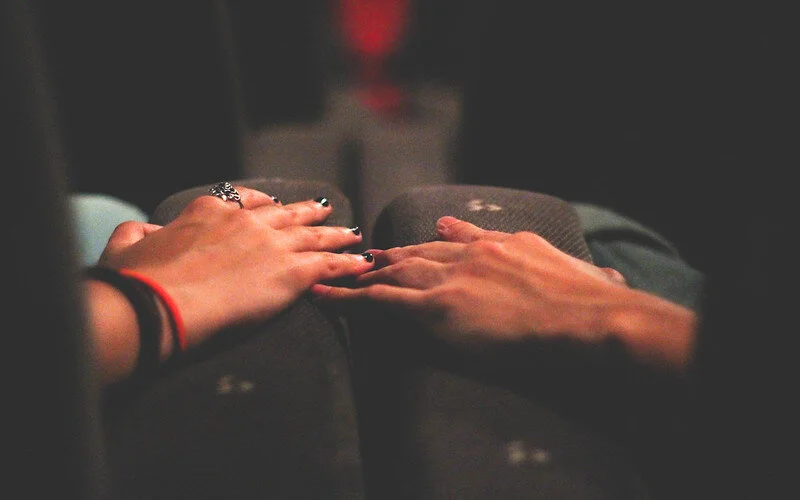
Leatherface by Carol Claassen
“In the past two years she’s known him, he’s told her almost everything about the movie. No surprises. She knows how it ends.”
Read More
“I saw an opportunity to approach this very serious history from a different angle” - Maceo Montoya
A Normal Interview with Maceo Montoya
I saw an opportunity to approach this very serious history from a different angle.
Read More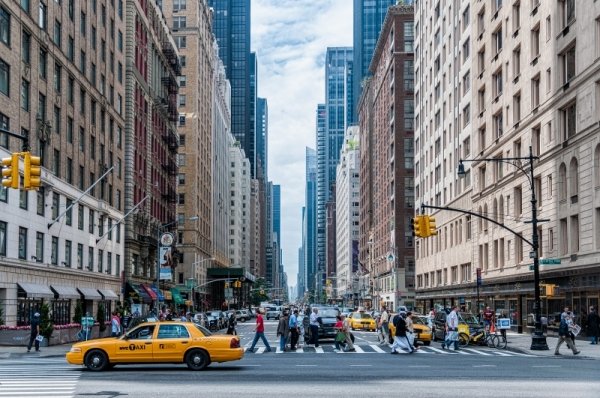
Home by David L. Ulin
“Still, what else does New York provoke but memory — for me, anyway, who hasn’t lived here for more years than my children have been alive?”
Read More
Two Poems by Alan Chazaro
Today I learned how to jungle walk while chucking clouds
from cliff sides & ruins aren't really ruined

Sun Orange, a Poem by Lauren Hilger
In California, we sat around a fire and I broke the code.
Read More
Pos Moua published his first collection of poetry, the chapbook Where the Torches are Burning (Swan Scythe Press) in 2001. His second collection of poetry was recently released, a full length book entitled Karst Mountains Will Bloom (Blue Oak Press, 2019). His poetry explores the depths of love and grief, the natural and spiritual worlds, the body and the soul. Karst Mountains Will Bloom has been described as “a landmark achievement: ascendant, transcendent, visionary” by Fresno Poet Laureate Lee Herrick. Poet Mai Der Vang, author of Afterland and winner of the 2016 Walt Whitman Award, says that Pos Moua has given readers “radiant language and natural eloquence… the dark and light of his heartscape.” A poet of great grace and honesty, Pos Moua is a pioneer of Hmong American literature and a true visionary.
A Normal Interview with Pos Moua
To live in poetry is to be honest.
Read More
The Inspired Painting by Derek Updegraff
Once a person looked down from a cloud, and she thought to another person…
Read More
A Normal Interview with Brian Turner
Poetry is a type of internal architecture, a form of world-building done verse by verse.
Read More
Stereoscope for Longing by Terin Weinberg
“As the mulberries grew
I re-learned the rough trace
of his jawline—the clean bite”

Two Poems by Charlie Oak
A flight attendant handed me a tiny bottle of Vodka
and a note, like an antiseptic to the wounds
stowed under the seat in front of me.

Somersault by Mally Zelaya
I once got lost in a forest at the bottom of the sea. That’s what I told Suzanne, my therapist, but she didn’t believe me. She gave me that look of hers which always made me feel like a little girl, a lying little girl, a bad little lying girl in need of a scolding. “Seriously,” I said, retreating into the protective breast of her couch. “It’s true.”
Read More
Juan Felipe Herrera has said of Sara Borjas’ first book, Heart Like a Window, Mouth Like a Cliff, “This is a groundbreaker. Good-bye to fashionable old stuff, adios to the graspable that can never be touched. Come to the fearless. A brava-shaking collection.” It has been referred to as autobiographical, but it is more a consideration of the speaker’s identity, place, loss, love, and perseverance.
A Normal Interview With Sarah Borjas
When we are heartbroken, we aren’t at a loss. We are resourceful. We are still here.
Read More
Birds Sing to Breathe by Joe Bonomo
“She sings about idealized romance bruised by clumsy hands; she sings about drinking, and f***ing, and mornings waking up in dubious beds. She sometimes sings about her own career (“Paid”) and about singing. (And singers. Cue up “Steve Earle.”) I’m wondering how much of a story a voice, alone, can tell.”
Read More
The Last Missouri Aspens by Annie Sand
I glanced at the photograph: a teardrop shape, the size of my palm, its edges toothed with soft points curving up from stem to tip, a yellow aspen leaf. Bigtooth aspens are common in Iowa, Michigan, Wisconsin, and Minnesota, but not in Missouri, where differences in climate and soil hem their natural range. I’d been told that somewhere in Adair County, in a nature preserve called Big Creek, was the last stand of bigtooth aspen known to exist in the state. When I’d found out, I’d immediately called my mother.
“I’ve got your trees,” I told her.
Read More
Two Poems by Lisa Ludden
Under the pressure of my hands you’d kick.
I’d guess your features, drawing your likeness to mine.
Mostly we were silent, finding our way with each other.
I didn’t have the words, yet.

Writing Instructions for Non-Native Speakers by Robert Anthony Siegel
We are placed in a guest house on campus, a sort of rotting cottage out of a folk tale, hidden in a world of its own behind a ten-foot wall of bamboo and flowering bushes. I sprawl on the bed, staring at the water stains on the ceiling, sweating. I’ve never experienced jet lag this intense.
Read More
Two Poems by Saúl Hernández
At Night My Body Waits
It’s winter outside, sharp
tree branches scratch
my window, I can hear
the sound of a train
passing. My uncle slips
into my bed and wraps his
hands around my boy body. Tightly
he cups my moon face, and
says, I’m not going to hurt you.
I lie in bed and I think
of my brother and cousins:
Do you keep his little secret too?
My voice underneath the blankets
Grows smaller as his hands feed
off my body. At night, I wake up
to a train in the distance.
At dinner, I see my uncle
in the man sitting next to me
his body asking for more space
as his arm sits on my left leg
adding more weight than
what I already carry.
I become small again
laugh awkwardly.
The man at dinner
tells me to smile more.
In those words I remember
my uncle and I want to yell
rot in hell motherfucker
but the man is not him.
After dinner, I play back
the encounter, I ask myself if what
was underneath my clothes tempted
him like it tempted my uncle to
touch me underneath the blankets.
I know I didn’t lead my uncle to
touch me underneath blankets but
maybe that’s why I sleep naked at
night waiting for my uncle to show up again
in my bed telling me to quiet down as
he puts the hand with which he’d high five me
over my mouth.
When I first came out, mamá asked
if my uncle touched me.
I looked her in the eyes, shook
my head, and I swallowed my uncle
whole again.
Tonight winter comes gently and
in the distance the sound of trains.
I lie naked in bed. My own hands
tempted to touch my body
all the way.
For My Queer Ancestors
Somewhere across the border,
beyond the desert,
beyond cerros,
my family history
is erased each day.
But I only know them by name:
Federico
Elvira
Antonio
Magdalena
Maybe you, too, held
hands with a boy like you
or a girl like you?
Matheo
Griselda
Luis
Zoraida
To take a leap,
means sometimes losing your family:
Gustavo
Micaela
Angel
Esmeralda
If I lose them I will ask
you to help me find myself,
Arnulfo
Esperanza
Luis Mario
Marisol
If you can read this
I’m losing myself.
In Mexico, l ask my
grandfather if anyone in
our family is gay
he says, in nuestra sangre
there aren’t any of them,
And I say:
Tomas
Francis
Juan Jośe
But he walks away.
Saúl Hernández is a queer writer from San Antonio, TX. He was raised by undocumented parents and as a Jehovah Witness. Saúl has a MFA in Creative Writing from The University of Texas at El Paso. He’s been featured on the radio show Words On a Wire, where he discussed gender roles and read a poem titled “Tortillas.” He’s the former Director for Barrio Writers at Borderlands; a writing workshop for the youth to learn, craft, and perform their work, as well as be published in a yearly anthology by SFA Press. He's a semi-finalists for the 2018 Francine Ringold Award for New Writers, Nimrod Literary Journal, and a quarter-finalist for The Pablo Neruda Prize for Poetry, Nimrod Literary Journal. His work has been featured in Rio Grande Review, Brunch Club in Association with Hello Mr. and Adelaid Literary Magazine. His work focuses on the dangers of existing and being a threat to oneself. He teaches Advance Placement Language and Composition at a high school.
Photo by SubodhBharati on Foter.com / CC BY-NC-ND