
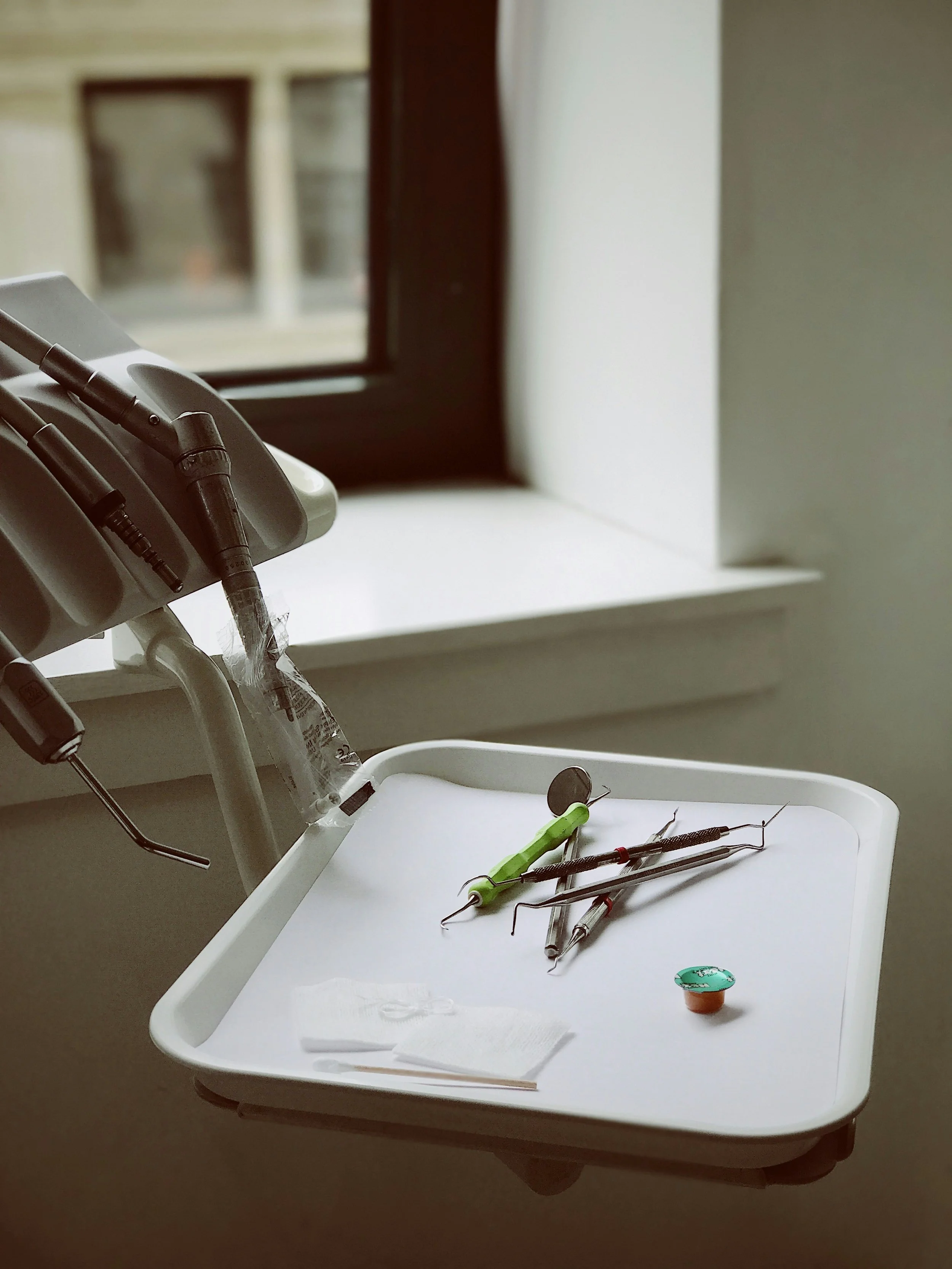
Lorraine was going to the dentist to see her estranged daughter. She hated the dentist, the scraping at her teeth, the prodding at her gums. However, she Googled Julie McNeese, as she did every Wednesday, and discovered she’d landed a new job at a practice just an hour’s drive away. Her husband had told her it wasn’t worth anyone’s time. They hadn’t spoken in four years, after all. But her back molar ached, and someone should deal with it.
When she arrived at the little blue office, she tried to smile in a way that conveyed she was a good mother, not the kind of person with an estranged daughter. Could the receptionist see it in her face, the same widow’s peak, the curve of her nose? Julie used to threaten to get a nose job. Lorraine had a similar inclination to make empty threats, so she was certain her daughter hadn’t followed through. The receptionist took her name and told her to sit. A pop song was playing in the background. The others were called back one by one: Sandy, Mark, Denisha.
Beyond the lobby, down the fluorescent hallway, Julie saw her mother’s name appear on her screen. She considered passing her to someone else, but she knew Lorraine would cause a scene and embarrass her. No, she would fulfill her obligation, not make a big deal of things, and get her to leave as soon as possible.
When Julie opened the door to the waiting room, her mother clutched her purse and stood, assessing her in the tense, expectant way she’d done since she was born. Her roots had gone gray, which was unlike her. She always wanted to appear younger than she was. Julie suspected Lorraine did this on purpose to remind her that she wouldn’t be alive forever. Oh God, Julie thought. What if Mom is here to tell me she has cancer? I can’t take care of her.
“Come on, then,” Julie said.
She led Lorraine to room #5. On the wall hung a painting of children boarding a trolley. It creeped her out, how the artist rendered too much white around their irises.
Her mother looked around like she’d never been in an exam room before.
“So my daughter is a dentist.”
“A dental hygienist.”
Lorraine sat in the teal plastic chair, and her daughter placed a leaden bib over her chest. She made her bite on a chunky block while she took X-rays, leaving the room to flip the switch and move the block to different parts of her mouth. She seemed agitated, her commands clipped: open, close, stay still.
“Do I have a cavity?"
“The dentist will tell you.”
“But can’t you tell?”
“I’m not a dentist.”
Julie replaced the X-ray bib with a small paper bib. She lowered Lorraine’s chair, tugged her mask up, and clicked the overhead light.
“How often do you brush your teeth?”
“Often enough.”
“Do you floss?”
“What’s wrong with my molar?”
“Open up.”
Lorraine’s daughter began to scrape her teeth, which was horrible and unpleasant. Surely she was being rough on purpose. She liked to hurt people in a personal way. Once she beheaded a baby doll and left it in Lorraine’s bed. The doll had beautiful blue eyes and a pink checkered dress. Lorraine had taken extra care to pick it out for her 10th birthday. Julie had screamed at her: Why do you always treat me like a baby? I hate babies! I hate you! Lorraine had screamed back: Because you are a baby! You’re my baby, and I hate you too!
While Julie switched tools, Lorraine asked, “Do you have any kids?”
“I’m divorced.”
“Who would want to divorce you?”
It took longer than expected for Julie to scale her mother’s teeth. They were coated in thick yellow tartar and her gums were inflamed, so she constantly had to rinse the blood away. One of her molars was gray in the center, decayed. After Julie was finished, she handed her a cup of water. Lorraine swished and spit, pink liquid swirling in the sink.
“It will help to gargle salt water at home,” Julie said.
“What’s that going to do?”
Growing up, Julie’s mother taught her to make her bed every morning and eat dinner at 6 p.m. every night. However, the last time Julie had visited the house, there was food rotting in the fridge and expired perishables from 2008. Home cooked meals had turned into take out. She didn’t understand how her mother could turn out this way. She’d read a study about lead poisoning, how Lorraine’s generation had crawled around in lead-ridden homes as babies, sticking their hands in their mouths. The long-term exposure started to affect them in their middle age, resulting in behavioral changes, irritability, and memory loss.
Julie pulled out an electric toothbrush and squeezed toothpaste onto the bristles.
“I can do that myself,” Lorraine said.
“It’s my job.”
“It will hurt if you do it.”
“Because you neglected your teeth.”
Julie resented Lorraine for passing her stubbornness onto her. It’s why her husband divorced her. He’d yell at her: You’re so stubborn my hair is falling out! But perhaps it was Julie’s own fault for having poor taste in men. At sixteen, she dated a boy who would crush beer cans on his forehead. When he inevitably broke up with her, Lorraine told her it was useless to cry over a man. She made Julie write a letter detailing everything she disliked about him and read it aloud to her each morning. At some point, it did make her feel better. Maybe she should try that with her ex.
Ignoring the request, Julie began to brush Lorraine’s teeth. As the bristles thrummed, her mother winced. Fluoride dribbled from the corner of her mouth, so Julie wiped it with her paper bib and rinsed her up.
“Now I need to floss you,” Julie said.
“When are you going to fix my cavity?”
“The dentist will talk to you about that.”
“Can I floss you?”
“You want to floss my teeth?”
“Please.”
If this got her to leave sooner, Julie was willing to do it. She switched places with Lorraine in the chair, lowered her mask, and looked up at her mother—her graying hairline, the crinkles lining her blue eyes, that crooked nose. Lorraine used to stand in front of the mirror and say she despised her ugly nose. Julie felt bad for her, the insecure woman. She didn’t grow up in an era when women were affirming.
Lorraine gently shimmied the floss between her daughter’s teeth. It was difficult flossing another person, but Julie didn’t flinch, likely on account of having healthy gums. When Julie stopped calling, Lorraine was convinced she’d reach out if she caught the stomach flu, if she got rear-ended. But she never did. She had raised her daughter to look after herself.
“Alright.” Julie sat up. “That’s enough.”
“I’m not done.”
“The dentist has to see you.”
“No.” Lorraine threw the pack of floss at the wall. “Listen to your mother.”
Julie stood. She placed her hands on Lorraine’s shoulders to move her into the chair, but Lorraine grabbed her arms and pushed. Julie stumbled backwards into the cabinets and bit her tongue. If they were younger, Julie would have shoved her back, but it would be cruel to shove an old woman. And Lorraine knew it. She saw the thought flash across Julie’s face.
“I take care of myself just fine,” Lorraine said.
“You have cavities.”
Lorraine took her purse from the hook, swung it at Julie but missed and nearly lost her balance. Julie grasped her arm and said, “Calm down. Now.”
They stared at each other. Widow’s peak, blue eyes, crooked nose.
“I don’t know who you are anymore.”
Lorraine plodded down the hallway, back to the lobby, her gums throbbing. She couldn’t bear to lay in front of the dentist and open her mouth. It was one thing for her daughter to observe the state of her teeth but it was another for a stranger. Lorraine used to tell Julie that she wasn’t allowed to send her to a nursing home. Julie was to pull the plug if she ever lost her mind. But as she ticked closer to that age, the thought of death terrified her. She assumed she’d become more comfortable with it, but she was scared all the time.
“Ma’am?” the receptionist said. “Do you want to check out?”
Lorraine paused. “I’ve lost my daughter.”
“Your daughter?”
Julie entered the lobby just as Lorraine walked out the door. Her car was parked out front, but she marched right past it, clicking her keys in the air. The headlights flickered as her mother waded further into the lot, her head bobbing between the cars. Then Julie lost sight of her.
“Did you schedule a follow up appointment with her?” she asked the receptionist.
“She didn’t want one.”
“She has five cavities and might need a tooth pulled.”
“I can’t force her.”
Julie stepped outside, the spring air crisp on her bare arms. It was a large parking lot, connected to a strip mall. She began jogging through the rows of cars, determined to make her mother face the dentist. He would inject her with Novocaine, causing her lips to go numb, drool leaking down her chin. She would squirm and complain, refusing to let him extract the bad tooth. If Julie had gone to dental school, she’d be able to take care of her, like a daughter should. But that was someone else’s job now.
“Mom…Mom?” Julie called.
A truck stopped to let her cross the lane. She zipped between more cars, shopping carts, families carrying groceries, kids in strollers.
It might be best if Lorraine was put under. She’d wake confused and dizzy with gauze stuffed into her cheek. Maybe she’d gush about her favorite memories from Julie’s childhood. Maybe she’d go on one of her rants, blaming Julie for her suffering. Throughout this whole ordeal, the dentist would witness her mother’s decay.
And there was Lorraine. She was fumbling with her keys, standing next to a silver Toyota that resembled her Honda Civic. “My car won’t unlock.”
Julie took her by the elbow and guided her across the lot. Once they returned to her vehicle, Julie put her in the passenger seat and buckled her in. Then she climbed into the driver’s seat, pressed the ignition, and backed out of the spot to drive her mother home.
Kelly Dasta is a writer living in Brooklyn, New York. Her work has been published in X-R-A-Y, The Journal, The Los Angeles Review, and other publications. She holds an MFA in Creative Writing from the Brooklyn Writers Foundry, and she was a 2025 Writer-in-Residence at Casa Uno in Costa Rica. In her free time, she enjoys going to indie punk shows, getting lost in museums, and walking her dog Pepper in the park.